Can Christians Practice Witchcraft?
Welcome, dear seeker. I am Amira Asmodea, here to share some reflections on a question I often receive: Can Christians practice witchcraft? Today, I hope to offer you a gentle, clear view drawn from experience and respect for the varying paths souls walk.
At the heart of your question lies a desire to understand whether it’s possible to be both Christian and a practitioner of witchcraft. The short answer is, yes, it is possible. But like any spiritual journey, it invites honest exploration and personal understanding.
What is witchcraft, and how does it relate to Christianity?
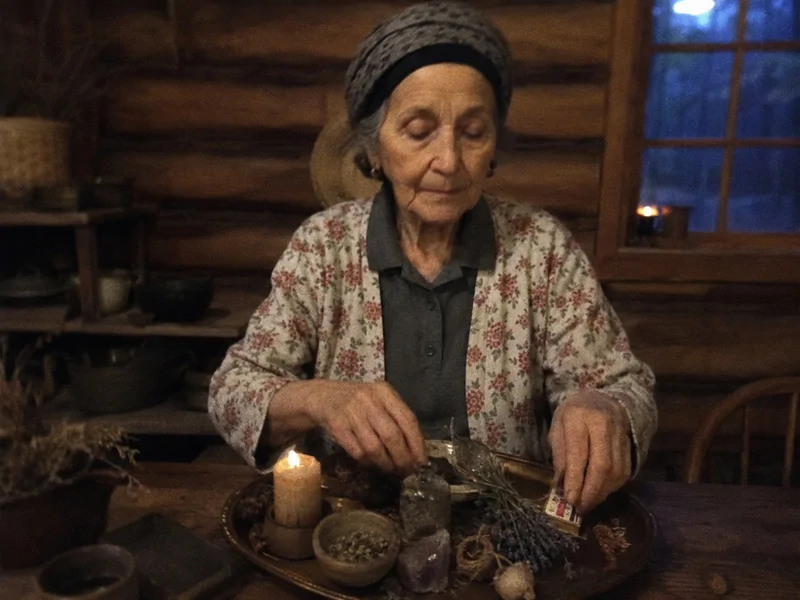
Witchcraft is a broad term for a collection of traditions and practices often focused on working with natural energies, herbs, symbols like sigils, candles, and spells to bring about change or protection in one’s life. It’s not a single religion but rather a set of practices that many people incorporate alongside their spiritual beliefs.
Christianity, traditionally, centers around the worship of Jesus Christ and teachings found in the Bible. Historically, witchcraft has sometimes been seen as incompatible with Christianity, primarily because of misunderstandings and fear that witchcraft involves the worship of evil spirits or Satan. However, many modern practitioners and scholars have shown that witchcraft itself is not about devil worship.
Is witchcraft Satanic or connected to Satan?
This idea often comes up, so let me clarify with care. Satanism as understood in Jewish-Christian traditions portrays Satan as an adversarial figure, a source of evil and opposition to God. Witchcraft and Wicca, by contrast, do not include any figure like the Christian Devil or Satan as part of their beliefs.
Wicca is a religion of nature and balance. It honors cycles of life, the sun, the moon, plants, and animals, seeing divinity expressed in the natural world rather than as an external “evil” being. For example, many pagans honor the Horned God, figures like Cernunnos, who represents life cycles, nature’s wildness, and fertility.
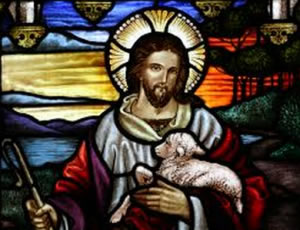
Historically, some Christian ideas about Satan might have been influenced by the image of pagan horned gods, often misunderstood and cast as symbols of evil. This misinterpretation arose partly because Christianity, with its clear-cut ideas about good and evil, saw pagan gods as rivals or false, even blasphemous.
Can a Christian be a witch?
In my experience, many people do blend Christian faith with witchcraft practices. This blending is a personal journey rather than an established tradition, and it might be met with curiosity or confusion by others—but it is truly lived by many.
A Christian witch might worship Jesus and follow Christian teachings while also honoring nature, using herbs, candles, and spells in their daily life. They may see witchcraft as an extension of their faith, a way to connect more deeply with God’s creation.
It’s important to recognize that Christianity and Wicca are distinct religions with different theologies, so combining them can feel complex. Some pagan paths encourage purity in their practice, and some Christians might find traditional witchcraft incompatible with their beliefs. However, the spiritual landscape today is rich and varied, and many souls find their path speaks to both.
Take, for example, people in places like Mexico and parts of Africa where Christian identity blends naturally with ancestral magic and ritual, reflecting a cultural tapestry rather than a strict division. Similarly, many raised in Christian households in Western countries explore witchcraft without fully leaving their Christian faith.
Who are pagans, and how do they approach spirituality?
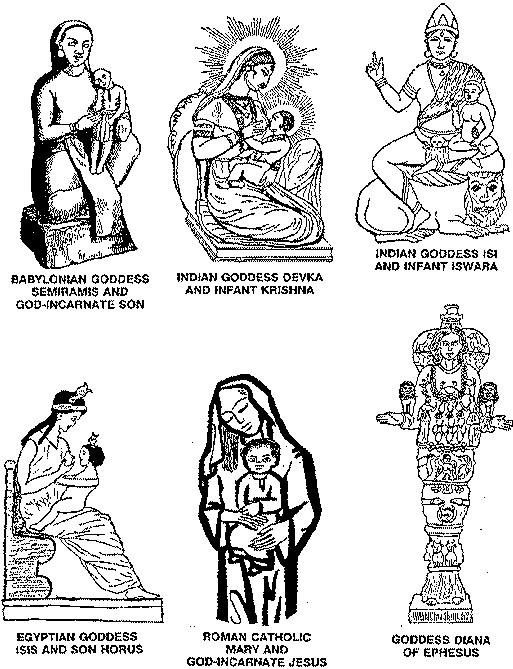
A pagan (or neopagan) is someone whose spirituality centers on revering nature as sacred. Rather than setting God above and Satan below, pagans see the spirit in the earth, sky, plants, and animals. Many resonate deeply with the idea of the Great Mother Goddess, who may go by names like Isis, Demeter, Gaia, or Pachamama, connecting them with life’s nurturing force.
Wicca is one form of neopaganism that includes rituals and beliefs centered around nature’s cycles and dual deities like the Goddess and the Horned God. But not all pagans are Wiccan, and not all pagans practice magic or ritual. Some follow Druidism or other paths, while many are eclectic—drawing on what feels meaningful without adhering to a formal religion.
This diversity within paganism reflects the freedom many modern practitioners seek—to create and follow a spiritual path uniquely their own. Understanding this can help us appreciate how some Christians might embrace witchcraft practices while continuing to identify with their faith.
Questions readers often ask
Is it safe for Christians to try witchcraft? With any spiritual practice, it’s wise to proceed with respect, intention, and understanding. Witchcraft, when centered on healing, protection, or personal growth, can be a gentle way to connect with nature and your own power. If you’re a Christian considering this path, reflect on what aligns with your heart and faith.
Does practicing witchcraft mean abandoning Christianity? Not necessarily. Some find that witchcraft enhances their connection to the Divine, while others feel called to keep the paths separate. It’s a personal choice without one right answer.
Can Christians use spells without conflicting with their beliefs? Often, spells are simple rituals focused on intention—lighting a candle for peace, carrying a herb for luck, or drawing a protective symbol. Many Christian traditions, too, use prayer and ritual. When seen this way, spells can harmonize with faith rather than oppose it.
Remember, dear reader, that spirituality is a deeply personal journey shaped by experience, culture, and heart. What matters most is walking your path with honesty and respect for yourself and others.
Thank you for sharing this moment with me. If your curiosity is stirred, I warmly invite you to explore more at Amira Asmodea—there is always more wisdom and magic waiting here.
Bibliography
- Doreen Valiente. An ABC of Witchcraft Past and Present. Robert Hale, an imprint of The Crowood Press, 1999. ISBN 9780719826917.
- Buckland, Raymond. Buckland's Complete Book of Witchcraft. Llewellyn Publications, 1986. ISBN 9780875420509. Source.
- Gerald Gardner. The Meaning of Witchcraft. Aquarian Press, 1982. ISBN 1950506789. Source.
- Gardner, Gerald. Witchcraft Today. Rider & Company, 1954. Source.
- Scott Cunningham. Wicca: a guide for the solitary practitioner. WICCA A GUIDE FOR THE SOLITARY PRACTITIONER SCOTT CUNNINGHAM Llewellyn Publications, 1993.