Tarot of the Witch's Garden
Welcome, dear traveler, to a quiet corner of tarot magic that feels like a whispered secret and a warm embrace. I’m Amira, and if you’ve ever sought a deck that both soothes your spirit and enriches your practice, the Tarot of the Witch’s Garden offers just such a refuge.
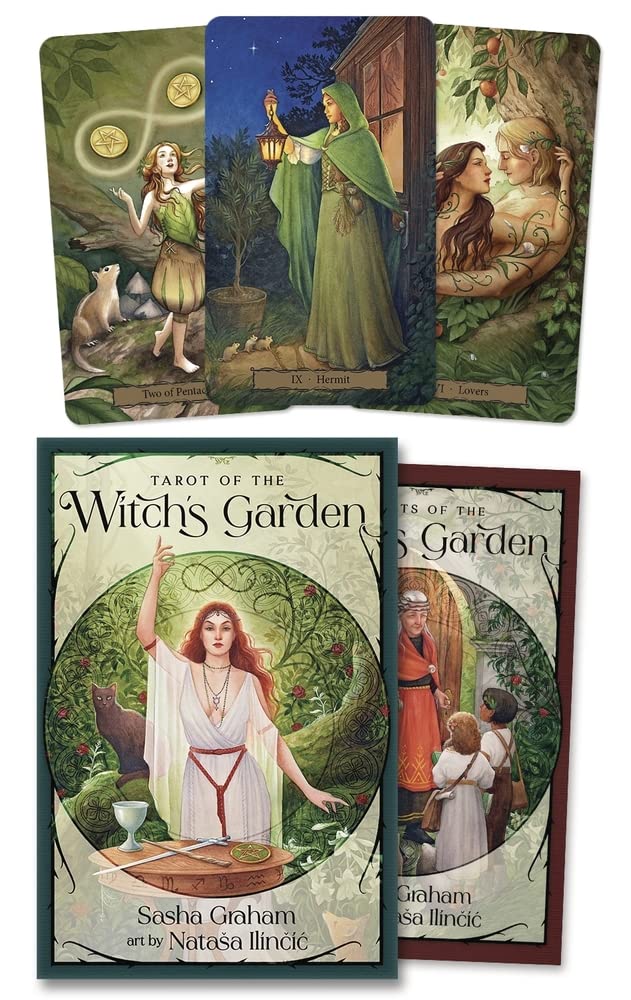
At its heart, this deck invites you into a lush, blossoming sanctuary—a place where intuition grows as surely as the flowers and herbs painted with loving care. Designed in the Rider-Waite-Smith tradition, it’s a delight both familiar and fresh, wrapped in delicate watercolors by artist Natasa Ilincic. These gentle illustrations carry the comforting charm of cottagecore scenes, offering moments of calm respite from the frantic rhythms of modern life.
I often find that the most nourishing decks are those that feel like old friends, ones you can return to again and again to find different meanings as your inner garden changes through the seasons of your life. Tarot of the Witch’s Garden is such a companion—its imagery rich with symbolic hints, yet tender and inviting enough for both seasoned readers and those just starting to learn the cards.
A Closer Look: What Makes This Deck Special?
The artist’s choice of subtle pastels and fresh greens evokes the peace and renewal of a garden blooming in spring. But beyond their beauty, these cards are designed thoughtfully to hold the Rider-Waite-Smith archetypes that anchor so many tarot readings. For each card, Natasa Ilincic adds a quiet magic—a fresh lens on classic symbols that whispers stories about nature, growth, and hidden wisdom.
Many practitioners appreciate the way the deck bridges everyday life and mysticism. The garden is not merely a pretty setting; it’s a metaphor for your own inner landscape. Just as gardens require attention, patience, and care, so too does your intuition and tarot practice flourish with nurturing.
The Guide Book: Sasha Graham’s Insightful Wisdom
Complementing the artwork is the companion book by bestselling author Sasha Graham, whose words feel like gentle guidance from a wise friend sitting by your side. Her explanations unlock the deck’s whispers, helping you discover layers of meaning in each image. Whether you’re journaling your readings or looking for ritual ideas, the book grounds your experience in both tradition and practical use.
One thing I hold dear—and this deck supports it well—is the idea that tarot is less about predicting the future in stone, and more about unveiling inner truths and sowing seeds for mindful decisions. Tarot of the Witch’s Garden encourages reflection and personal growth through its serene imagery and thoughtful interpretations.
Practical Ways to Use This Deck
In my experience, a deck like Tarot of the Witch’s Garden becomes part of daily ritual in small, meaningful ways. Here are some suggestions you might find nourishing:
- Morning Intuition Spark: Pull a single card to start your day with a quiet thought or meditation focus.
- Garden Meditations: As you connect with the card art, visualize yourself in the garden scene—notice sights, sounds, scents—and ask what wisdom it offers you personally.
- Ritual Companion: Use the deck alongside a candle, herbs, or crystals connected to the card’s theme to deepen your ritual work.
- Journaling Prompts: Reflect on the archetypes that appear and write about how they relate to your current life path or challenges.
This gentle, nature-infused deck isn’t about rushing to answers but about growing an ongoing relationship with the subtle rhythms inside you—much like tending a garden through the seasons.
Questions Readers Often Ask
Is this deck suitable for beginners?
Absolutely. Many witches and tarot readers begin with Rider-Waite-Smith style decks because their symbolism is well documented and widely supported with rich guidance. The soft, inviting imagery here makes it especially accessible, and Sasha Graham’s companion is a wonderful learning tool.
How does the ‘witch’s garden’ theme influence readings?
The garden invites you to think about growth, cycles, and the nurturing aspects of life and magic. When you see a card showing blooming flowers or herbs, it might suggest blossoming potential or the need for patience. It adds a natural, organic layer of meaning to traditional tarot cards, bridging the practical with the spiritual.
Can this deck be used for specific intentions like love or money?
Yes, the deck’s imagery encourages connection with universal themes, including relationships, abundance, and self-care. While the cards themselves are traditional, their nature-inspired art can gently remind you to nurture those areas with care and respect for their natural cycles.
Continuing Your Tarot Journey
The Tarot of the Witch’s Garden invites you to slow down, breathe, and reconnect with the quiet magic blooming just beneath the surface of your day-to-day life. Whether you’re looking for a new deck to explore or seeking a fresh way to deepen your bond with the cards, this is a tender, enchanted place to begin or return.
You can also keep exploring tarot with these free tools:
Thank you for stepping into the witch’s garden today. May your journey with this deck be as gentle and enriching as a quiet stroll through blooming herbs under a soft sun. Keep exploring, and may magic grow in your heart.
Bibliography
- Waite, Arthur Edward. The Pictorial Key to the Tarot. William Rider & Son, 1911. Original edition 1910. Sacred Texts. Source.
- Pollack, Rachel. Seventy-Eight Degrees of Wisdom: A Tarot Journey to Self-Awareness. 40th anniversary hardcover gift edition, Red Wheel Weiser, 2020. Original edition 1980. ISBN 9781633412224. Source.
- Decker, Ronald, Thierry Depaulis, and Michael Dummett. A Wicked Pack of Cards: The Origins of the Occult Tarot. St. Martin's Press, 1996, 308 pp. ISBN 978-0-312-16294-8. Google Books.
- Knight, Gareth. A History of White Magic. Illustrated reprint, Skylight Press, 2011, 207 pp. ISBN 9781908011046. Google Books.
- Doreen Valiente. An ABC of Witchcraft Past and Present. Robert Hale, an imprint of The Crowood Press, 1999. ISBN 9780719826917.