What Is Grimoire pages? A Beginner’s Guide
Let me answer you plainly: grimoire pages are the heart of a witch’s or magician’s personal book of magic, often handwritten, filled with spells, symbols, prayers, rituals, and secret knowledge. These pages hold the accumulated wisdom — sometimes in Latin, sometimes in the native tongue — that guides the practitioner’s work with folk magic, spirit connection, protection, and personal transformation.
From my many years exploring the arcane, I’ve found these magical manuscripts to be deeply individual, mysterious, and practical all at once. The term grimoire pages might make you think of dusty old tomes hidden in forbidden libraries, written in arcane Latin script, and filled with cryptic diagrams. While that’s part of their historical flavor, today many witches create their own grimoire pages as a living record of their spiritual journey and magical experiments.
Understanding the Meaning Behind Grimoire Pages
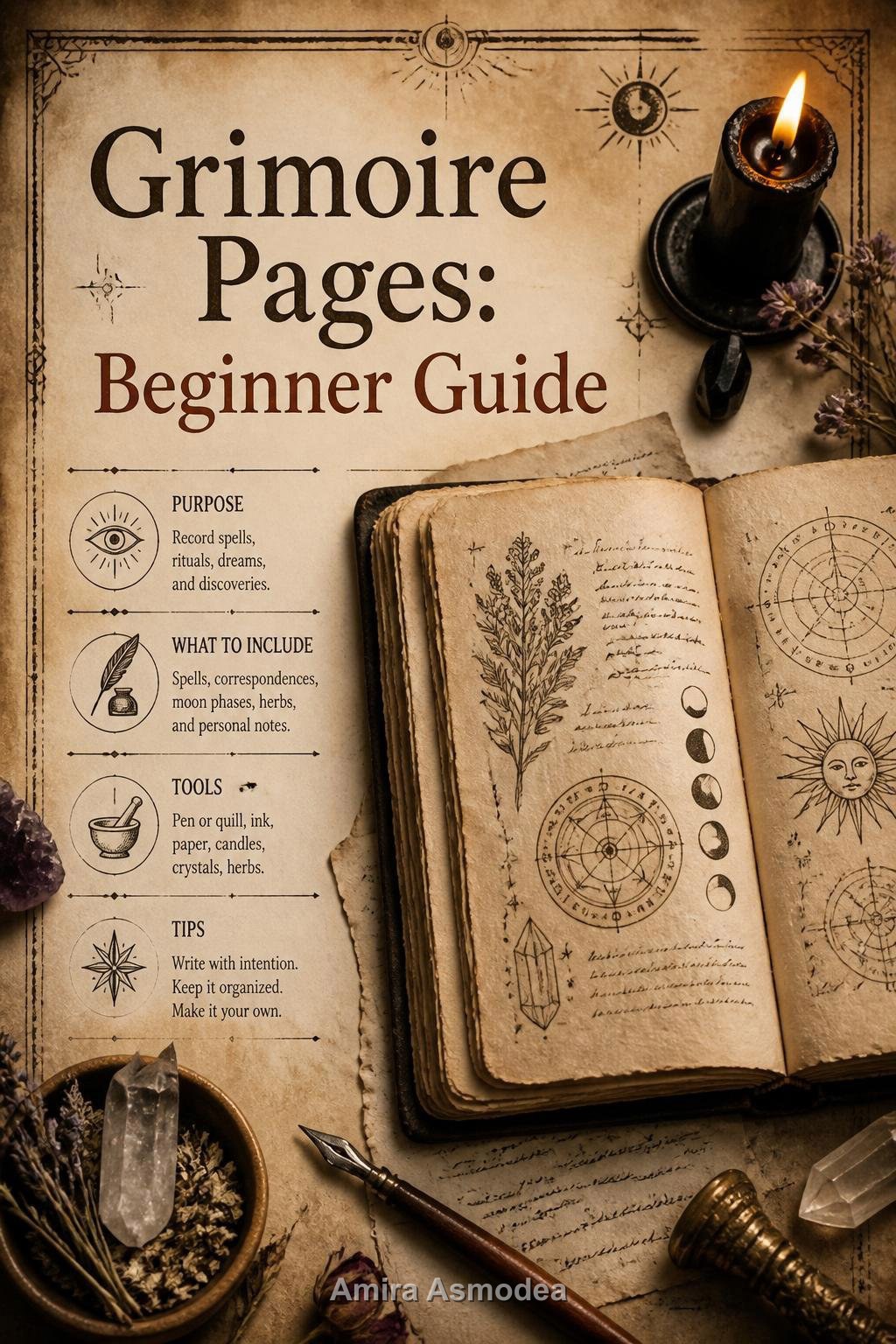
The word grimoire originally referred to a book of magic spells and instructions, often linked to European folk magic rooted in medieval to Renaissance times. The pages themselves often contain a mix of spells, invocations, sigils (magical symbols), planetary hours, herbs, and occasionally, words in Latin spells or other magical languages.
Many practitioners see grimoire pages as a physical and spiritual archive of knowledge. They are not just collections of recipes or incantations, but a bridge between the mundane and the mystical. The pages can carry deeply symbolic meaning to their compiler, acting like a map of the practitioner’s inner and outer magic worlds.
In spiritual terms, grimoire pages represent a commitment to learning, discipline, and intentionality. Writing something down gives it power and presence. When you inscribe a ritual or a charm with care, you are not merely noting instructions—you are weaving those intentions into the fabric of your personal magic.
Who Uses Grimoire Pages and When?
Witches, occultists, folk magicians, and curious seekers often compile their own grimoire pages at various stages of their practice. For some, it is a private diary of their magic and dreams; for others, a carefully organized manual of spells and correspondences.
Many begin using grimoire pages when they want to deepen their witchcraft journey, reminding themselves what has worked or recording insights from divination and ritual work. There’s no single right time—sometimes one page is created during a moment of intense spiritual awakening, or over months of trial and error, or as a way to preserve healing magic for future reference.
Traditional grimoires are also historical documents, used centuries ago by magicians who believed that knowledge could summon or command spirits, influence natural forces, or protect against harm. While we may not chase such grand notions in exactly the same way today, the careful recording of magical knowledge remains a powerful practice.
Ideas for Grimoire Pages and Layouts You Can Try
If you’re new to creating your own grimoire pages, start simple and let your book evolve naturally over time. Here are some ideas to inspire your first pages:
- Herbal correspondences: Write down herbs and plants you work with for healing, protection, or attracting love. Include names, qualities, and how you use them.
- Moon phases and rituals: Track the lunar cycle and the spells or meditations you do at new or full moons.
- Spells and incantations: Copy your favorite spells or write your own, noting the ingredients and intent.
- Sigils and symbols: Draw symbols that resonate with your magic. Adding explanations or invocations is helpful.
- Dream records and divination: Keep notes on significant dreams, tarot pulls, or pendulum readings.
For layout, some prefer neat, organized entries with dated pages, while others keep a more free-flowing, collage-like approach with drawings, pressed flowers, and handwritten notes mingling with printed texts. There’s no wrong way — your grimoire pages should reflect your personality and practice.
Traditionally, some practitioners decorate pages with small candles or incense burned close by, or write in different colored inks to distinguish types of magic. I’ve seen beautiful illuminated borders and intricate calligraphy in old grimoires that add both beauty and protective symbolism.
Symbolism Found in Grimoire Pages
Every element on a grimoire page can carry symbolic meaning beyond the words themselves:
- Latin words: Often used because of their ancient, ritualistic feel, Latin phrases are thought to hold power through age and mystery. They echo medieval magic’s roots and can protect or amplify a spell’s intent.
- Geometric shapes and sigils: These are visual mantras, each designed to focus energy or invoke a particular spirit or quality.
- Herbs and natural elements: Drawing plants or including physical herbs on pages symbolize connection to earth and cycles of nature.
- Colors and inks: Different colors may be linked to moon phases, elements, or energies like love (red), protection (black), or prosperity (green or gold).
Interweaving these symbols on a page enriches the grimoire, making it a tactile, multi-sensory tool for magical work.
What Practical Cautions Should You Keep in Mind?
While compiling grimoire pages is a beautiful and empowering process, I’ve come to notice a few important reminders for beginners:
- Respect personal and spiritual boundaries. Some traditional grimoires include content considered “forbidden” or restricted. It’s wise to approach this knowledge with caution, respect, and an ethical mindset. Forbidden books offer fascinating history but don’t have to be copied blindly.
- Focus on intention rather than gimmick. Filling pages just for the sake of it can feel hollow. Take time to reflect on why you’re writing or drawing each element.
- Beware of overcomplicating early on. Beginners often feel pressure to write in Latin or create complex sigils. While that can be inspiring, true magic also lives in simplicity and honest intention.
- Keep your grimoire safe and private. Since these pages record your spiritual work and often personal revelations, choose a secure space where you can create and consult them freely.
In my experience, these gentle cautions help a grimoire become a trusted, empowering companion rather than a dusty curiosity or a source of confusion.
Finding the Spiritual Meaning in Your Grimoire Pages
Many practitioners find that the very act of making grimoire pages deepens their spiritual connection. Writing down spells or recording insights from divinations is a way of anchoring ephemeral, mystical experiences into the physical world.
Some see their grimoire as a living spirit or guide—breathing in their touch, growing with their intent. Others use it as a mirror, seeing changes in their own understanding and power over time within the evolving pages.
Perhaps the most beautiful aspect is how folk magic, once an oral and secret tradition, becomes a personal story embodied in those pages—woven from dreams, earth, fire, and whispered ancient words.
Questions You May Still Have About Grimoire Pages
Do I need to know Latin to create my own grimoire pages?
Not at all. While historical grimoires often include Latin for its ritual resonance, many modern practitioners use their native language or invent magical words meaningful to them. The intent behind the words carries more weight than the language itself.
How often should I update or add to my grimoire?
There’s no set schedule. Some witches add pages daily, others only after significant rituals or revelations. It’s important to write when inspired or when new knowledge strikes, rather than forcing it.
Can I use printed materials in my grimoire?
Absolutely. Many like to combine handwritten notes with printed images, clips from books, or other artistic elements. This blend can make your grimoire both practical and beautiful.
Is creating a grimoire the same as a Book of Shadows?
They are similar but can have different nuances. A Book of Shadows is often a personal collection of spells and experiences used by many modern witches, especially in Wicca. A grimoire traditionally refers more broadly to magical manuals, sometimes more formal or historical. You can learn more about the Book of Shadows to see which style suits you.
Can a beginner benefit from studying older grimoires?
Yes, with mindful attention. Studying historical grimoires can offer insight into ritual structure and symbolism, but it’s best to use them as inspiration rather than instructions to follow literally, especially since some material was intended for different cultural and ethical contexts.
Remember, your own grimoire pages should feel like a sanctuary tailored to your inner magician.
As you build your grimoire, you’re joining a long line of seekers who found power in the written word, the curve of a symbol, and the flame of candlelight reflected on ancient parchment. Whether you write in your own language, copy Latin phrases, or sketch garden herbs, your grimoire pages become a bridge to the mysteries that call you.
For those curious about the layers of magic hidden within old books, learning more about Latin spells or the history behind forbidden books can deepen your appreciation before you create your own pages.
May your hands guide your pen with reverence and magic, and may your grimoire pages hold the light of your true will. Until next time, take gentle care of your craft and let your book of shadows—or shall I say grimoire—grow as your magical story unfolds.
Bibliography
- Owen Davies. Grimoires - A History of Magic Books. Oxford University Press, 2009. ISBN 9780199204519.
- Waite, Arthur Edward. The Book of Ceremonial Magic. William Rider & Son, 1911. Source.
- Joseph H. Peterson. Grimorium Verum. Citadel Press, 2007. Source.
- Mathers, S. L. MacGregor, trans. and ed. The Grimoire of Armadel. Routledge & Kegan Paul, 1980. ISBN 9780710000835. Source.
- Stephen Skinner & David Rankine. The Veritable Key of Solomon. Other Books, 2000. ISBN 9780954763923.
- Waite, Arthur Edward. The Book of Black Magic and of Pacts. George Redway, 1898. Source.
- Doreen Valiente. An ABC of Witchcraft Past and Present. Robert Hale, an imprint of The Crowood Press, 1999. ISBN 9780719826917.