5 Mistakes People Make with Salt Cleansing Rituals
Hello, dear reader, Amira here. If you’ve ever reached for salt to refresh your home’s energy or protect your spirit, you’re in good company. Salt cleansing rituals have long been cherished in witchcraft and folk magic for their grounding, purifying qualities. Yet, like any sacred practice, salt work carries subtle traps where intentions can fumble or energy can backfire if approached without care.
Today, I want to gently guide you through five mistakes people commonly make when using salt cleansing rituals to remove stagnant energy and protect a space. These are not meant to scare or discourage you, but rather to help you approach your work with salt thoughtfully, respectfully, and safely.
Understanding Salt’s Spiritual Meaning and Why It Matters
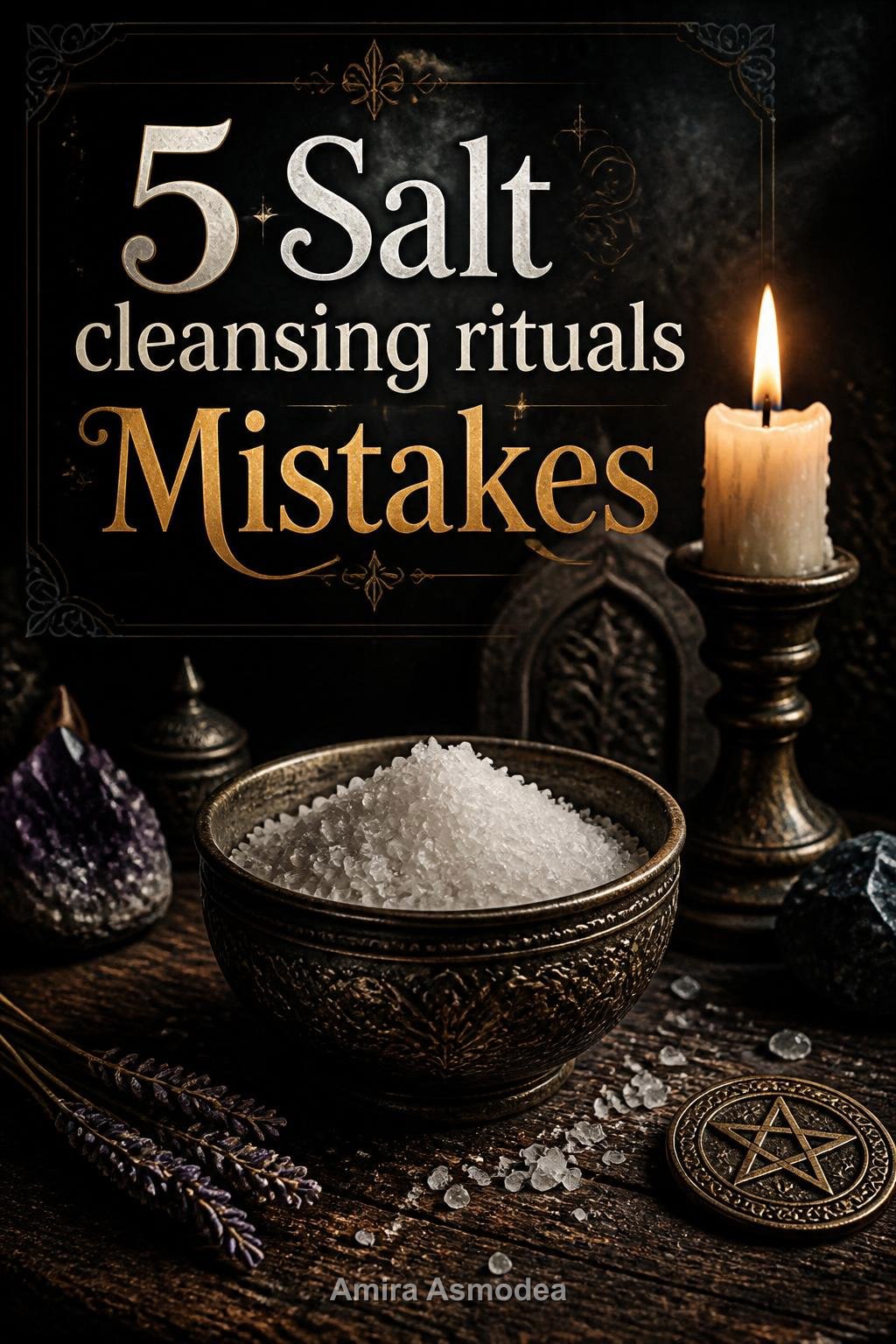
Before diving into the pitfalls, let's consider salt’s spiritual meaning. Traditionally, salt symbolizes purity, preservation, and a barrier against negativity. In many cultures, salt is believed to absorb or repel bad energy, making it a reliable tool for clearing spaces and creating protective boundaries.
Salt cleansing ritual meaning goes deeper than just the physical act of scattering salt. It embodies intention, focus, and respect for unseen forces that influence our spiritual well-being. When salt interacts with energy fields, it works as a kind of gentle purifier, helping dissolve stagnant or harmful influences that cling to people, objects, or places.
Mistake 1: Using Salt Casually Without Respect or Clear Intention
Many beginners think salt cleansing is as simple as sprinkling salt somewhere and expecting instant results. In my experience, salt cleansing ritual for beginners must always begin with intention. Just like lighting a candle or whispering a prayer, salt only works when you direct it consciously.
Using salt without setting an intention risks treating it like a mundane cleaning product rather than a spiritual ally. This often leads to little effect and can even cause frustration or confusion. For example, tossing salt randomly at a doorstep might not clear stagnant energy as much as a mindful ritual that includes visualizing purification or mentally affirming protection.
Try starting your salt work with a simple intention phrase, such as "I clear this space of all stagnant energy and invite peaceful vibrations." Let your focus guide the salt, or you might end up scattering salt without truly engaging with its spiritual power.
Mistake 2: Overdoing It or Using Salt Aggressively
Salt is a strong element, and using it excessively or harshly can create unintended consequences. I've encountered many practitioners who, feeling anxious about negative energy, over-salt an area or object. This heavy-handed approach can sometimes feel hostile rather than protective, disrupting subtle energies instead of balancing them.
For instance, dumping large amounts of salt around a space like a fortress can cause a kind of energetic 'burnout'—where the environment feels cold, heavy, or stagnant in a different way. This might make inhabitants uneasy, rather than uplifted.
Salt cleansing is very much a practice of gentle balance. A light, even sprinkle or a mindful salt-water soak will usually suffice to shift energies without 'over-cleansing.' Remember, less is often more when it comes to folk magic.
Mistake 3: Neglecting to Cleanse Salt After Use
Salt absorbs heavy or negative energy; that is its gift. But that means once salt has done its job, it carries that collected energy and should not be left lying around or reused indiscriminately. This is a common oversight I’ve seen among well-meaning practitioners.
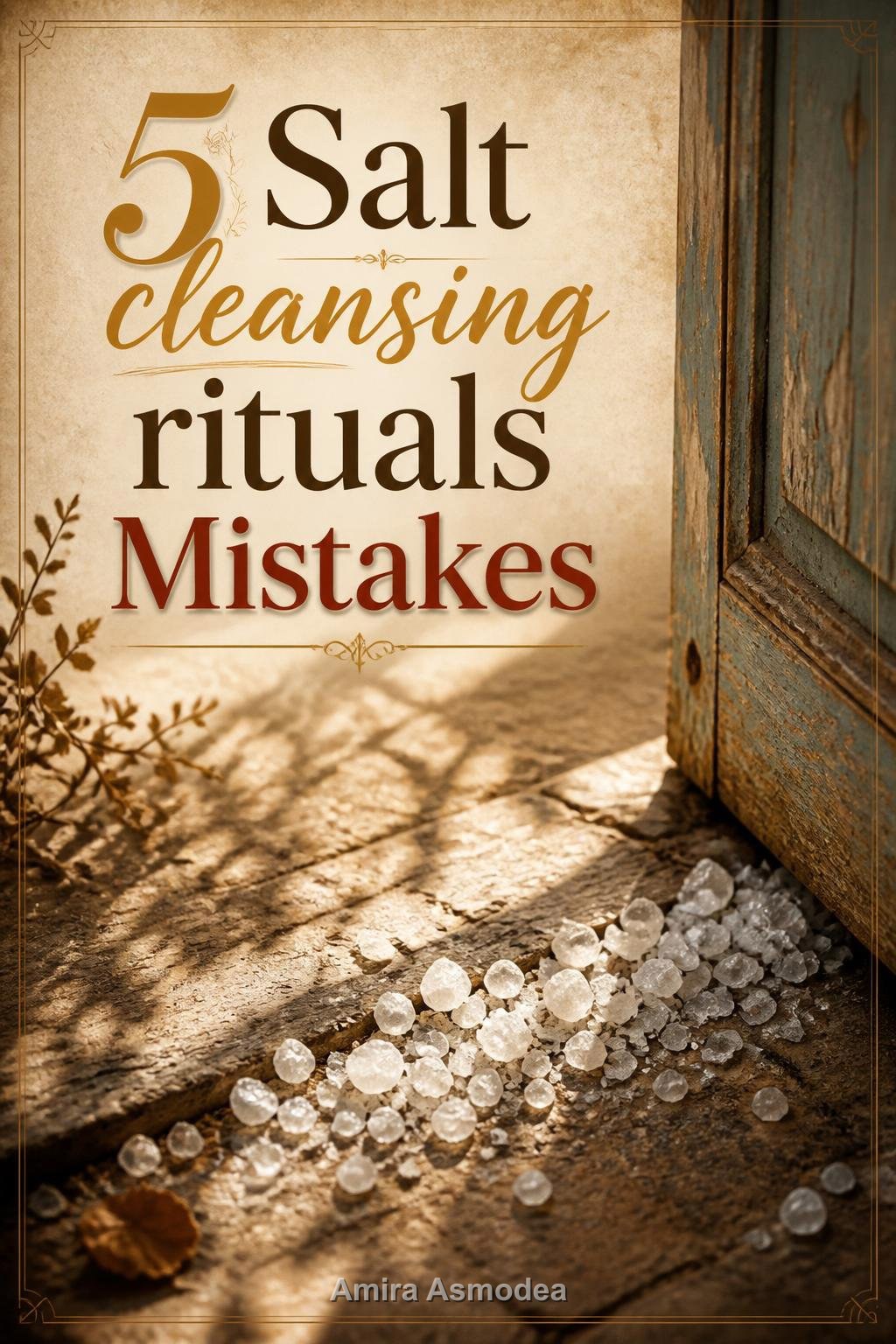
After completing a salt cleansing ritual, be sure to dispose of the salt respectfully—many choose to throw it outside, away from doorways and living areas, letting the earth absorb it. Avoid tossing used salt down drains or inside your home, as that could bring locked-in negativity back inside.
Some also like to neutralize used salt by leaving it in sunlight or adding it to water to dissolve, releasing its carried energies safely. Establishing a post-ritual routine for salt care prevents the buildup of stagnant energy and honors the salt’s work.
Mistake 4: Confusing Salt Cleansing with Complete Protection
Removing stagnant energy and protecting a space are related but not identical. A salt cleansing ritual, while useful, rarely offers full protection on its own. Many people expect salt to act as a spiritual shield, only to feel vulnerable afterward.
Protection spells or wards often require additional elements beyond salt—such as herbs like rosemary or sage, candles, spoken charms, or protective sigils. In fact, salt is often a supportive component within a broader ritual rather than a standalone solution.
For example, after clearing a room with salt, you might anoint a doorway with protective oil or draw a simple sigil on an amulet. If you want to dive deeper, exploring protection spells on Amira Asmodea’s site can offer practical ideas to complement your salt work.
Mistake 5: Ignoring Emotional and Mental State During Ritual
Spiritual practices like salt cleansing are deeply connected to our emotional and mental states. In my experience, approaching a cleansing ritual while feeling rushed, angry, or uncertain often blunts its effectiveness and, sometimes, can stir up unsettled feelings.
It's important to check in with yourself beforehand: Are you calm and clear in your mind? Do you truly want to release old energy, or are you avoiding something? Many practitioners find it helpful to journal their feelings surrounding the ritual, noting any emotions or intuitions that arise.
Salt cleansing can open doors within, so rather than fearing emotional waves, allow yourself to proceed gently. If difficult sensations linger, seek supportive practices like meditation or egg cleansing to balance the energetic shifts.
How to Approach Salt Cleansing Rituals Safely and Respectfully
- Set a clear and kind intention before you begin, inviting the salt to help you gently release and protect.
- Use salt thoughtfully and sparingly, respecting its strength without overwhelming your space.
- Dispose of salt carefully after the ritual, acknowledging how it carries energies away from you.
- Complement salt with other protective elements if your goal is ongoing spiritual shielding.
- Honor your emotional state throughout, allowing the ritual to be a moment of care, not pressure.
When Should You Choose Salt Over Other Cleansing Methods?
Salt cleansing rituals serve wonderfully for removing heavy, stagnant energy that feels like a fog hanging about your home or self. Compared to a cleansing with smoke or water, salt can offer a dry, physical boundary that is stable and long-lasting until removed.
For those new to spiritual cleansing, salt is accessible and affordable. However, if your situation involves deeply rooted negativity or complex psychic influences, combining salt with ritual baths, herbs, candles, or professional guidance is often wiser.
Questions You May Still Have About Salt Cleansing Rituals
- Can I reuse salt from a previous cleansing ritual?
Generally, it’s better not to reuse salt as it may have absorbed negative energy. Disposing of it respectfully helps maintain the purity of your work. - Is sea salt better than table salt for cleansing?
Sea salt or natural, coarse salt is traditionally preferred because it feels more natural and symbolic. Table salt often contains additives that some believe reduce its spiritual effectiveness. - Can I combine salt cleansing with candle magic?
Absolutely! Salt and candle magic complement each other beautifully, with salt grounding and purifying while candle flame raises intention and focus. - How often should I perform a salt cleansing ritual?
There’s no one-size-fits-all rule. Many practitioners cleanse their homes monthly, or when they sense heaviness. The key is to listen to the space and your intuition. - Is salt cleansing safe around children and pets?
Salt is generally safe, but scattered salt can be a slipping hazard or tempting for pets to lick. Use care to avoid messes or ingestion.
Around Salt and Folk Magic: Wisdom Passed Down
In folk magic, salt is a humble hero. From throwing salt over your shoulder to marking thresholds, salt rituals have woven there centuries of layered symbolic meaning. But the folk traditions always remind us: salt cleanses not by itself, but through relationship—with intent, respect, and rhythm.
Working salt into your spiritual toolkit calls for openness and a willingness to learn slowly. Like any craft, it unfolds best with reverence rather than rush. I encourage you to journal your experiences, observe what works and what feels off, and above all, treat salt as a partner, not a magic pill.
For those curious about enriching your cleansing practice, exploring both the egg cleansing guide and tips for protection spells can offer you added layers of insight and safeguard.
Thank you for sharing time with me here. May your spaces breathe fresh, and may your spirit find the safe haven it deserves.
Bibliography
- Laforest, Aura, and Catherine Yronwode. Hoodoo Spiritual Baths: Cleansing Conjure with Washes and Waters. Lucky Mojo Curio Company, 2014, 96 pp. ISBN 978-0971961265. Source.
- Mickaharic, Draja. Spiritual Cleansing: A Handbook of Psychic Protection. Weiser Books, revised edition, 2022, 144 pp. ISBN 978-1-57863-728-7. Google Books.
- Buenaflor, Erika. Cleansing Rites of Curanderismo: Limpias Espirituales of Ancient Mesoamerican Shamans. Bear & Company, 2018. ISBN 9781591433118. Google Books.
- Miller, Jason. Protection & Reversal Magick: A Witch's Defense Manual. Revised and updated edition, Weiser Books, 2023, 224 pp. ISBN 978-1-57863-799-7. Google Books.
- Starlight Witch. \"The Cleansing Power Of Salt Bowls: Removing Negative Energy From The Home.\" Patheos, March 2019. Accessed 18 July 2026. Source.