Salt cleansing rituals: Simple Checklist and Ritual Notes
I often find salt to be one of the most grounding and accessible tools in spiritual cleansing. If you’re seeking to refresh your home, altar, or personal aura—without fuss or complicated materials—a salt cleansing ritual can be a gentle yet powerful way to remove stagnant energy and protect a space. I’m Amira, and from my experience in folk magic, salt holds a long history of both physical cleansing and spiritual protection. Its use can feel nurturing, simple, and deeply symbolic.
Let’s begin with a clear yes: yes, a salt cleansing ritual works as a meaningful way to shift energy, especially if you approach it with intention and presence. Although no immediate 'magic' is guaranteed, salt symbolizes purity, boundaries, and the earth’s stabilizing power. These qualities help support your goal of clearing away old energy and inviting freshness in.
Understanding salt's spiritual meaning in cleansing
Salt’s spiritual meaning reaches far beyond just the kitchen shelf. Traditionally, it’s been seen as a purifier and protector—not only cleansing surfaces but also binding negative forces and keeping spirits at bay. In folk magic, salt often appears in protection spells and warding rituals for its ability to create natural energetic boundaries.
Why salt? In many cultures, the crystalline purity and mineral essence of salt echo the idea of dissolving impurities and attracting harmony. It’s a humble ingredient with a sacred reputation.
This makes salt a wonderful first step for beginners curious about spiritual cleansing. It requires no special preparation or certification—just respect, a touch of intention, and some simple tools you likely have at hand.
A quick checklist for salt cleansing rituals
To keep things straightforward, here’s a checklist to guide your ritual:
- Choose your salt: Sea salt or kosher salt are preferred here for their natural texture and symbolic weight over table salt.
- Prepare the space: Tidy the area physically. Clutter inhibits energetic flow.
- Set your intention: Decide what energy you wish to remove or invite—this will focus your ritual.
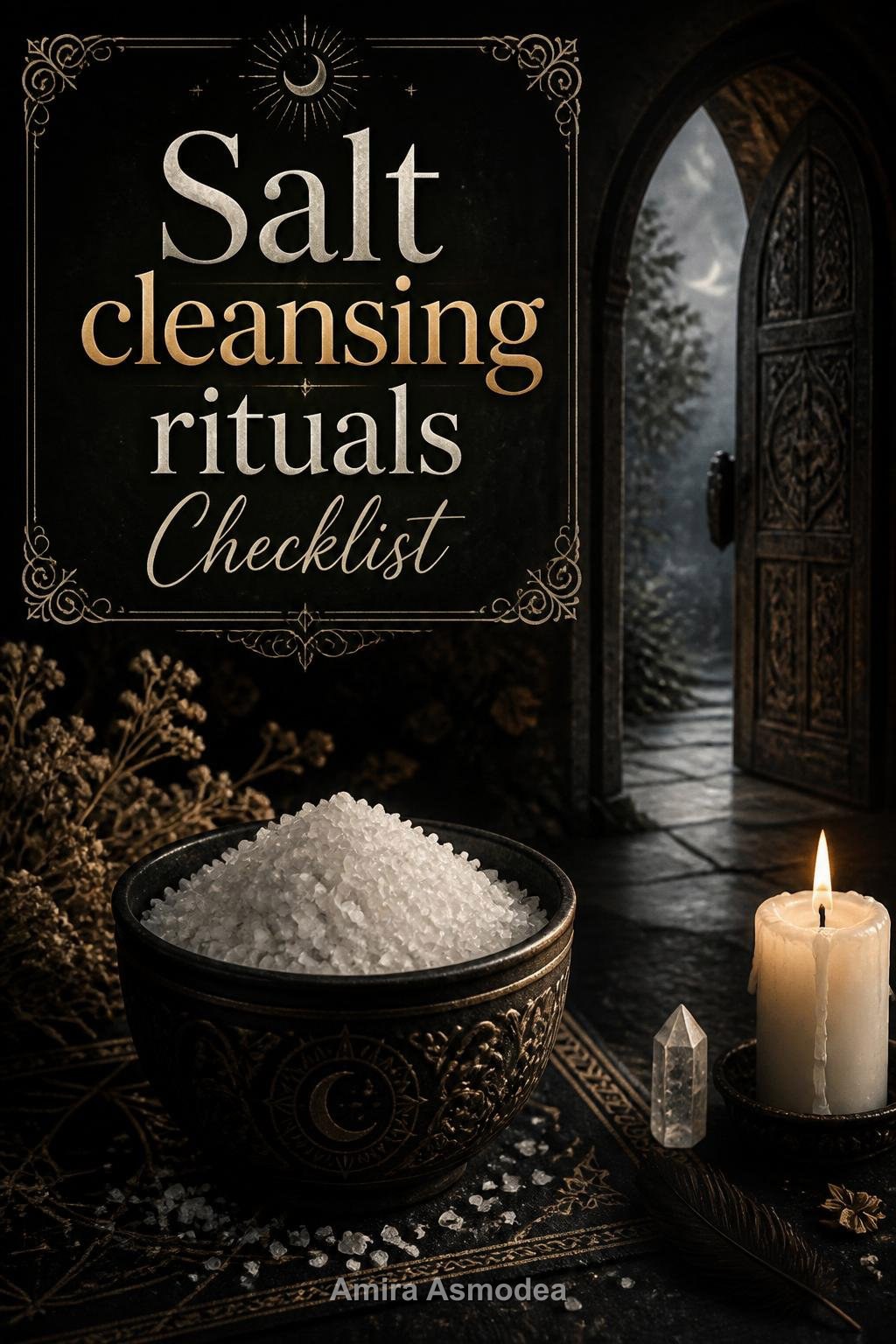
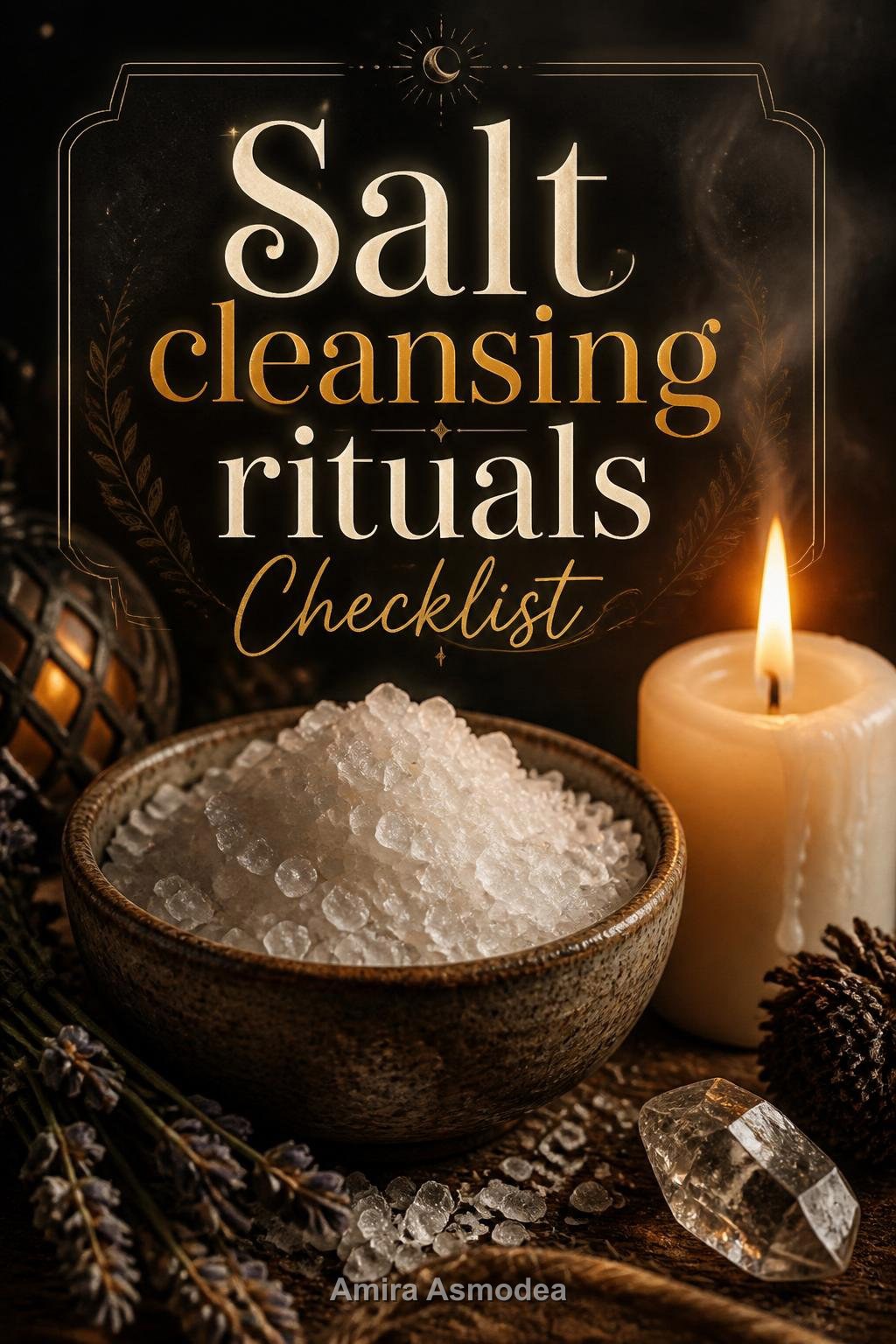
- Tools to gather: A bowl for salt, a white candle for light and purity, matches or a lighter, and optional herbs like sage or rosemary for added cleansing.
- Cleansing method options: Sprinkling salt around doorways/windows, creating a protective salt circle, or gently sweeping salt powder over surfaces.
- Performing the ritual: Light your candle, say a simple affirmation or prayer that aligns with your aim, then apply the salt mindfully around the space.
- Closing: Let the candle burn safely for a while or extinguish it if needed; dispose or store the salt respectfully after the ritual.
- Record your experience: Jot down any sensations, emotions, or shifts in your journal to track patterns over time.
Putting salt cleansing to work: remove stagnant energy and protect a space
In my experience, salt rituals excel at dissipating what practitioners often call “stagnant energy.” This is the tired, heavy emotional residue left by stress, conflict, or even just long inactivity in a room or object. Although it’s invisible, you might notice this energy as restlessness, unease, or mental fog.
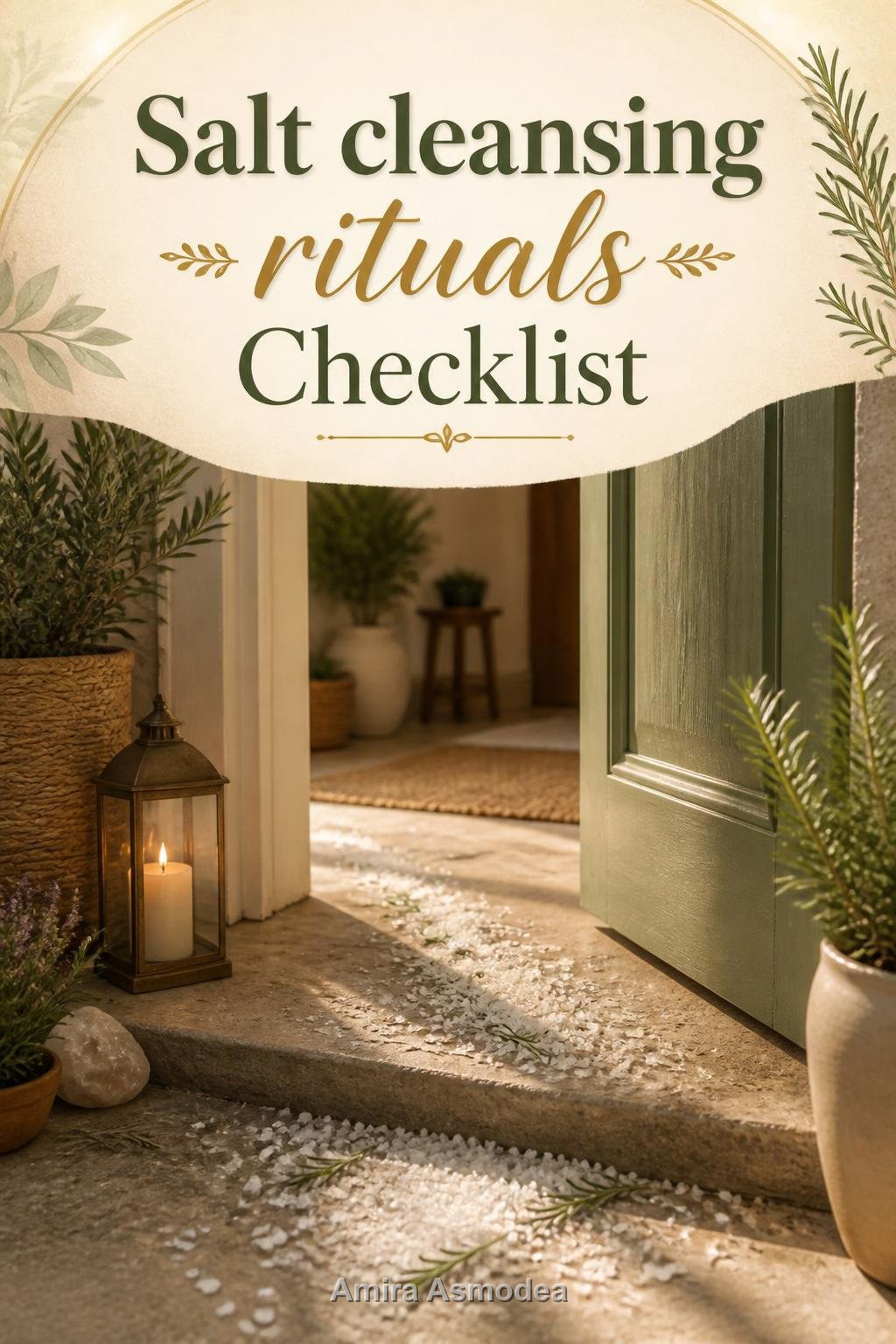
By spreading salt in entryways or around windows, you symbolically seal off places where negativity sneaks in. Creating a salt circle, whether on a floor or an altar, can serve as a protective boundary to keep the energy inside positive, or shield your personal space from outside influence.
What to watch for after your ritual
Practitioners often report subtle changes in mood or ambiance following salt cleansing. Some sense a lightness or freshness in the air; others feel more grounded and calm. These experiences may vary widely, so it’s important to stay open and observe what your personal response is.
Special notes for witchcraft salt cleansing rituals beginners
If you’re just setting out on your spiritual path, salt cleansing is a kind friend. Here are a few gentle pointers for beginning your practice:
- Respect the material: Treat your salt as more than a kitchen ingredient. Consider it an ally with its own energetic qualities.
- Don’t rush: Rituals work best when done with care. Take your time setting intention.
- Stay safe: Never leave burning candles unattended; keep your space well-ventilated when using smoke-cleansing herbs with your salt work.
- Adapt to your space: If ritual salt isn’t practical inside (say, with small children or pets), try sprinkling salt outside the front door or window sills instead.
- See it as symbolic work: Many practitioners believe the power lies chiefly in your clear intent and attention, not just what you sprinkle.
When to perform your salt cleansing ritual
The timing of your ritual can amplify your purpose:
- New moon: For fresh starts and clearing old energy.
- After illness or conflict: When you want to reset a space that feels heavy.
- Seasonal transitions: Spring and autumn are natural times for clearing and grounding energy.
- Before important events: To invite protection and clarity.
Some like to incorporate natural cycles or the waxing and waning of the moon as a kind of spiritual rhythm to their ritual timing.
Reader questions and curiosities about salt cleansing rituals
Many people wonder about specific details and variations of salt rituals. Here are a few commonly asked questions I’ve gathered over years of sharing my practice:
Can I reuse salt after a ritual, or should I always toss it?
Traditionally, many suggest disposing of salt used in cleansing by sweeping it outdoors away from your home to carry away the absorbed negative energy. However, some practitioners gently reuse salt if they refresh it first or charge it anew under the sun or moonlight. It often depends on your comfort and intention.
Is table salt okay, or does it have to be sea salt?
Sea salt or kosher salt are usually recommended for their natural state and absence of additives, which are thought to make them energetically "cleaner." Table salt sometimes includes anti-caking agents or iodine that some folks prefer to avoid in rituals.
What if I have pets — is salt safe to use in the house?
It's wise to be cautious. Sprinkling salt where pets can ingest it might irritate or harm them. Instead, try external demonstrations like placing salt on window sills or just outside the entryway. Always prioritize the safety of your companions.
Can salt cleansing work alongside other cleansing methods, like smudging?
Absolutely! Combining salt cleansing with smoke cleansing using herbs like sage or palo santo can create a layered approach that appeals to different senses and symbolic purposes. In my experience, salt offers grounding and physical purification, while smoke lifts and disperses energy.
How long should I keep the salt in place?
This varies. Some keep the salt sprinkled an hour or two and then clean it up; others leave it overnight or even longer, especially if they feel the space still needs clearing. Trust your instincts and the reactions you notice.
Mindful practices and common pitfalls to avoid
Though salt cleansing is simple, these little reminders can help your rituals be more meaningful and safe:
- Avoid rushing through the steps without intention; a distracted practice dilutes energy.
- Don’t use salt in spaces where moisture might cause damage or create slippery hazards.
- Be respectful with disposal — removing used salt into nature gently prevents negative buildup in your home.
- Remember that salt is one tool among many; it rarely works alone. For deeper space clearing, consider exploring egg cleansing guide techniques or incorporating protection spells.
Journaling prompts for your ritual reflection
After performing your salt cleansing, it can be enriching to write down:
- What was your intention and how you felt setting it.
- Any sensations or shifts noticed after the ritual.
- New thoughts or insights about the space or yourself.
- Any signs you observed that suggested stubborn negative energy, similar to those described in our bad energy signs post.
Over time, this personal record helps you understand how different rituals affect your unique environment and spirit.
Salt cleansing rituals, when approached with respect and mindfulness, become a heartfelt way to nurture and protect your most cherished spaces. Whether you’re a beginner or experienced practitioner, the simple act of sprinkling salt while focused on your intention can deepen your connection to folk magic and your own inner power.
Thank you for joining me today. May your home and heart be full of peace and light. If you wish to explore further, you might enjoy reading my egg cleansing guide next—it complements salt cleansing beautifully.
Bibliography
- Laforest, Aura, and Catherine Yronwode. Hoodoo Spiritual Baths: Cleansing Conjure with Washes and Waters. Lucky Mojo Curio Company, 2014, 96 pp. ISBN 978-0971961265. Source.
- Mickaharic, Draja. Spiritual Cleansing: A Handbook of Psychic Protection. Weiser Books, revised edition, 2022, 144 pp. ISBN 978-1-57863-728-7. Google Books.
- Buenaflor, Erika. Cleansing Rites of Curanderismo: Limpias Espirituales of Ancient Mesoamerican Shamans. Bear & Company, 2018. ISBN 9781591433118. Google Books.
- Miller, Jason. Protection & Reversal Magick: A Witch's Defense Manual. Revised and updated edition, Weiser Books, 2023, 224 pp. ISBN 978-1-57863-799-7. Google Books.
- Starlight Witch. \"The Cleansing Power Of Salt Bowls: Removing Negative Energy From The Home.\" Patheos, March 2019. Accessed 18 July 2026. Source.