Old Medieval Witchery Manuscript in Latin - I
Hello, dear seekers of ancient wisdom. I’m Amira Asmodea, and today I’m opening a secret window into the past—one of my oldest treasures, a medieval manuscript of Latin spells. This isn’t just any old book, but a relic that carried the whispered power of witchcraft through centuries before reaching my hands. I have kept this precious manuscript undercover for many years, but now I want to share a little of its mystery with you.
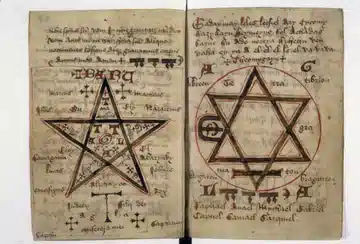
Before we delve into the words, here’s a glimpse of the manuscript itself, a page illuminated with stars, a pentagram, and a collection of arcane symbols—classic signatures of witchery written in Latin:
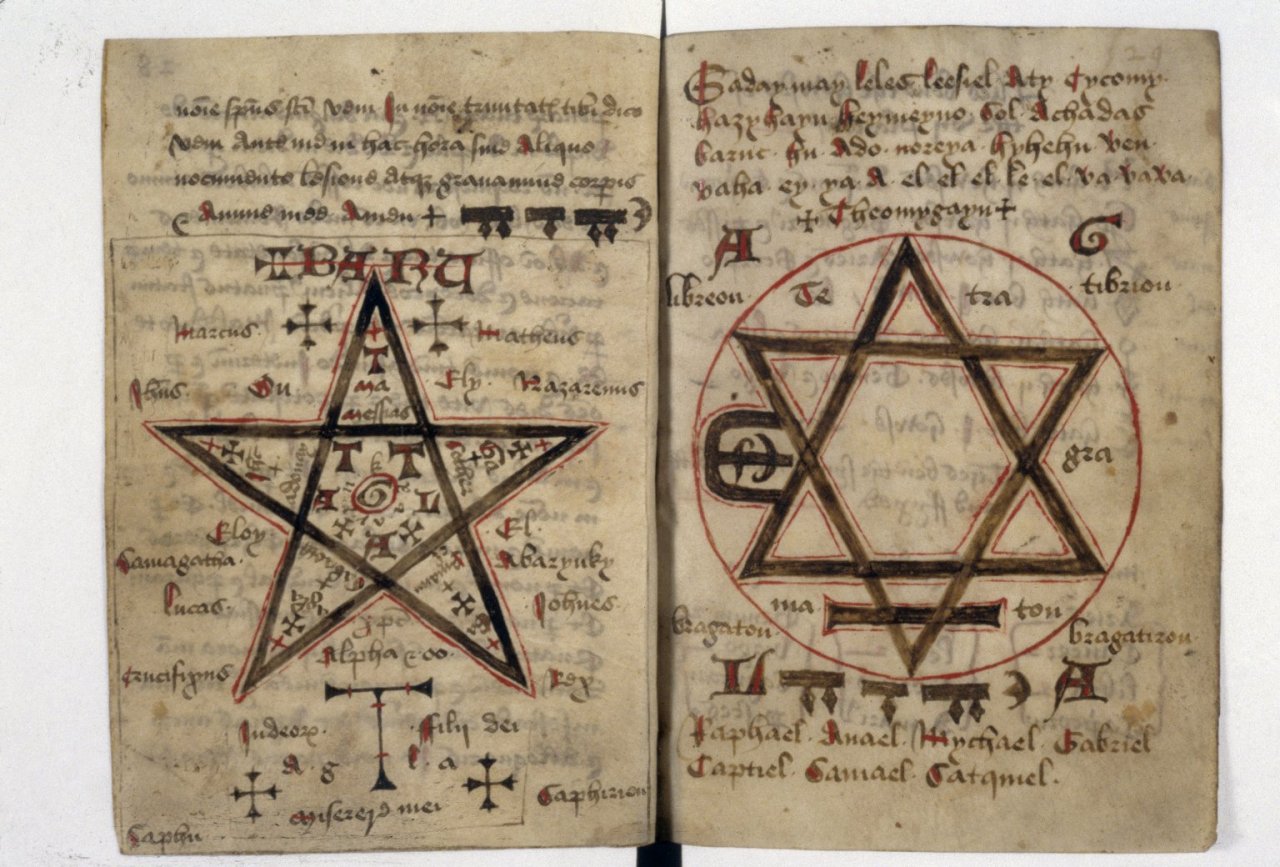
This page reflects more than just words—it’s a map to a world where symbols and Latin phrases weave together to call energies beyond our everyday senses. The pentagram, that five-pointed star many of us recognise, has long been a powerful symbol in witchcraft, representing the five elements and protection. The surrounding symbols likely held meanings and magical functions well understood by the witches who created and used this book.
Now, let’s look at the actual text, transcribed for you from the first two pages of the manuscript:
(Page 1)
Et dices ad colligunt nos satanas de sanguine verba,
O magnum nomen tuum in Deo tenebrarum ego sanctifico me ipsum
Pacto dicam necessitatem facere
Nam ad pacem tibi anima mea
(Page 2)
In nomine Beelzebub deum Accaron in Baal
O saeclum in nomine tuo ignis et satanas
Et venies de umbra et nos et ineamus focus
Hic praesens expecto Horabath cetus
So, what does this mean?
Here is my careful translation and interpretation of these Latin phrases:
“We collect Satan’s blood and say the words,
In your name, I consecrate myself O great God of Darkness.
I call you to make a dire pact
For you to bring prosperity to my life.”
In your name, I consecrate myself O great God of Darkness.
I call you to make a dire pact
For you to bring prosperity to my life.”
“In the name of Beelzebub, in the name of Baal,
Fire and earth in your name oh Satan.
You will come from the shadow and we will make a pact.
Here I await your presence in the Horabath whale.”
Fire and earth in your name oh Satan.
You will come from the shadow and we will make a pact.
Here I await your presence in the Horabath whale.”
These are evocative words—powerful and steeped in the imagery of ancient demonology, calling upon dark or shadowy figures from the old lore to form a pact, aiming for some form of prosperity or power in life. Names like Beelzebub and Baal hark back to the mystic pantheon of spirits often invoked, or placated, in medieval and earlier occult practices.
What is "Horabath whale"?
That phrase caught my eye. In contexts like this, "Horabath" might be a cryptic or coded term, a place, a spirit, or a vessel—a symbolic ‘whale’ holding the energy or space in which the pact is made and awaited. In later rituals and grimoires, such odd terms often point to secret knowledge passed between witches, hidden in plain sight.
Why invoke these names and symbols?
In my experience, medieval witchcraft manuscripts often combine Christian, pagan, and folk beliefs, resulting in complex spells that call upon powerful beings, both feared and revered. Invoking figures like Satan or Beelzebub was not always about evil as we think of it today, but about accessing a mighty force, calling on the shadows for aid, protection, or change.
This manuscript likely belonged to a witch who walked the balance between light and shadow, calling forth power carefully and with respect. Such texts were treasured, passed down through secret circles, and kept far from prying eyes.
Practical reflections for modern witches:
Today, whether you are drawn to the old paths or simply curious, it’s important to read such texts with reverence and caution, understanding their historical and spiritual context. These words echo a time when magic was deeply entwined with belief systems and survival strategies.
Symbols like the pentagram and ritual words remind us that the craft often calls on intention, focus, and sacred space. If you feel called to work with old invocations or texts, consider adapting them mindfully, translating their essence into modern rituals that honor your own path.
Questions readers often ask:
Is it safe to work with demon names from old spells?
Traditionally, these names represent forces or aspects that witches seek to understand or balance. Many practitioners believe safety comes from respect, clear intent, and protection rituals. It's wise to prepare well and consider your spiritual and emotional boundaries before calling on such energies.
Traditionally, these names represent forces or aspects that witches seek to understand or balance. Many practitioners believe safety comes from respect, clear intent, and protection rituals. It's wise to prepare well and consider your spiritual and emotional boundaries before calling on such energies.
Can I use this Latin text as a spell today?
In my experience, spells bloom when they resonate with your heart and spirit. You can draw inspiration from this text by translating its energy into your own words and symbols. Rituals are living, breathing practices, not cold scripts.
In my experience, spells bloom when they resonate with your heart and spirit. You can draw inspiration from this text by translating its energy into your own words and symbols. Rituals are living, breathing practices, not cold scripts.
What can the symbols on the page teach me?
Symbols like stars and pentagrams hold protective and elemental meanings, calling on universal forces. Studying their forms can deepen your connection and understanding, but they also encourage you to discover your own symbols and signs that carry meaning for you personally.
Symbols like stars and pentagrams hold protective and elemental meanings, calling on universal forces. Studying their forms can deepen your connection and understanding, but they also encourage you to discover your own symbols and signs that carry meaning for you personally.
As we turn these ancient pages together, I invite you to feel the pulse of the craft through the ages—the whispers of witches who came before us, their intentions carved in ink and spirit.
In upcoming posts, I will share more translations, insights, and stories from my trove of medieval books, unpacking the mysteries step by step. Until then, may your path be illuminated by the old wisdom, and your heart guided by the stars that shone over our ancestors.
Blessed be,
Amira Asmodea
Amira Asmodea
Bibliography
- Doreen Valiente. An ABC of Witchcraft Past and Present. Robert Hale, an imprint of The Crowood Press, 1999. ISBN 9780719826917.
- Buckland, Raymond. Buckland's Complete Book of Witchcraft. Llewellyn Publications, 1986. ISBN 9780875420509. Source.
- Catherine Yronwode. Hoodoo Herb and Root Magic. Knickerbocker Press, 2002. Source.
- Gerald Gardner. The Meaning of Witchcraft. Aquarian Press, 1982. ISBN 1950506789. Source.
- Gardner, Gerald. Witchcraft Today. Rider & Company, 1954. Source.