Spell of Protection in Latin
Greetings, dear traveler of the unseen paths. I’m Amira Asmodea, your warm-hearted guide through the mysteries of spellcraft and protection. Today, I invite you to explore a spell of protection in Latin — an ancient language woven with power and depth, lovingly preserved by generations of witches, healers, and sorcerers.
If you’ve felt the weight of dark energies, envy, or the unwelcome touch of harmful forces creeping near you or your loved ones, this spell can help. It’s a simple, direct way to call upon an old source of magic — to lift a shield of care and safety around you and those you cherish.
What is a Latin protection spell, and why use it?
In my experience, spells in Latin hold a beautiful balance of mystery and clarity. Latin has long been considered a sacred and ceremonial language, lending a resonance that goes beyond mere words — so many practitioners believe that its careful pronunciation and cadence awaken powerful energies within us.
Protection spells, in general, work by stirring our own natural strength, creating an energetic barrier, like an invisible shield, that keeps negativity, ill will, or dark intentions at bay. When spoken in Latin, this effect is often thought to connect us to centuries of wisdom, tradition, and spiritual lineage.
One essential thing to remember: protection spells, especially those crafted with care, never cause harm. Their purpose is solely to guard and heal, not to curse or bring about misfortune. When performed correctly, they offer a steady defense without unintended side effects.
A simple and effective Latin protection spell
Before you begin, find a quiet place where you feel safe, ideally outside under the full moon’s gentle light. The moon’s fullness is a moment when natural energies are at their peak, helping to amplify your intent.
Kneel before the moonlight, and take a few moments to calm your mind. You might want to cleanse yourself with a traditional ritual — a gentle smudging with herbs like sage or palo santo, or a splash of fresh water — to clear away lingering worries or tension.
When you feel centered, focus your mind fully on the spell. Concentrate on the protection you seek, imagining a bright, protective light surrounding you.
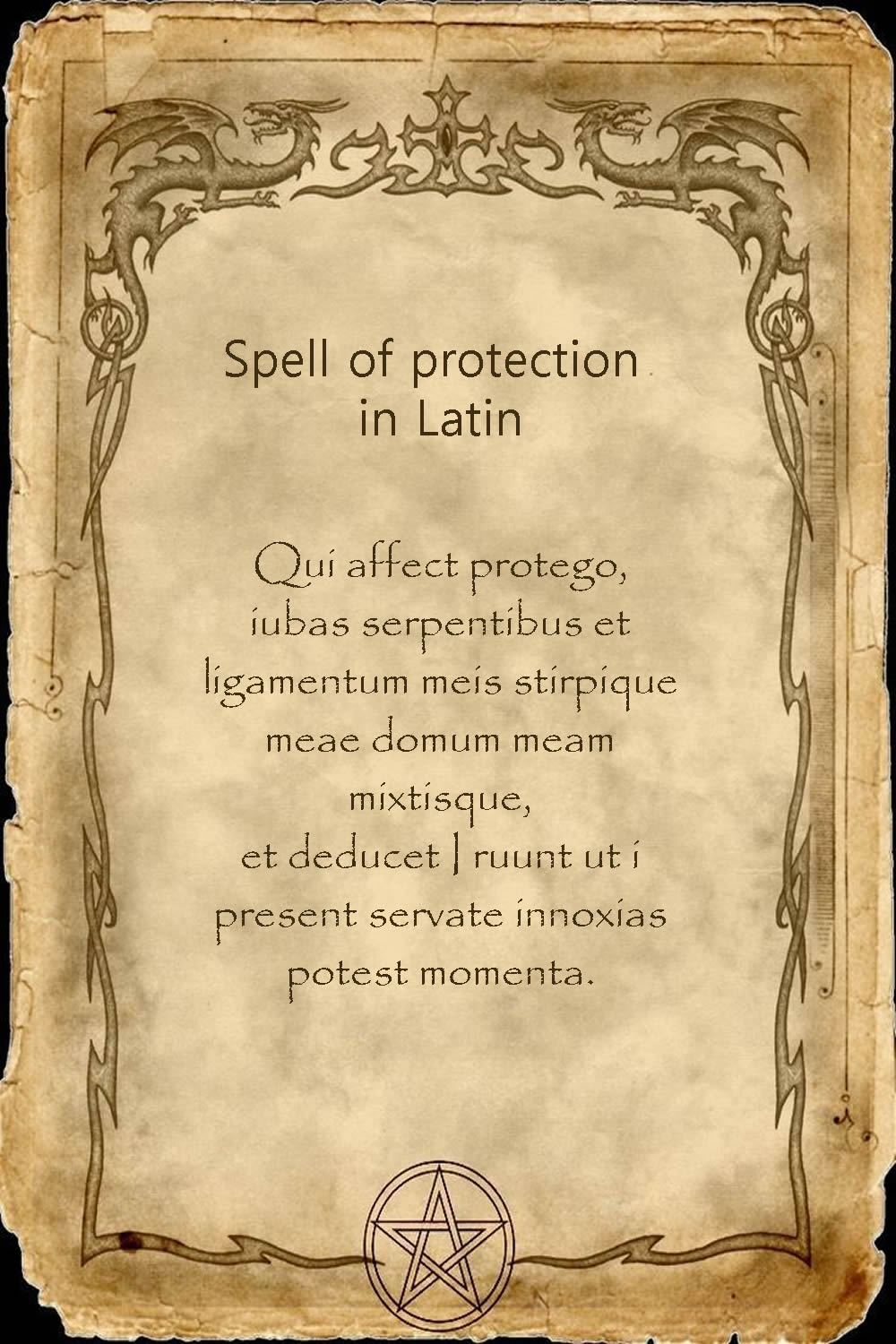
Now, speak these words slowly and clearly, paying careful attention to the pronunciation. In my experience, the clarity and intention behind each word are far more important than perfection, but a mindful recitation will help the spell’s power unfold naturally:
Qui affect protego,
Iubas serpentibus et ligamentum meis stirpique meae domum meam mixtisque,
Et deducet I ruunt ut i present servate innoxias potest momenta.
Repeat this incantation with steady breath, as if weaving an invisible cloak of safety around your home, your body, and your spirit. Let the words settle into your heart, and when you feel the spell is complete, take a moment to give thanks, either out loud or silently within.
What does this spell mean, and how does it protect?
This Latin incantation roughly translates to a plea for guarding and preserving the home and self from all harm, asking for a seal against venomous influences and danger. The imagery of serpents and bands is symbolic, often standing for potential threats or negativity that might coil or entangle in our lives.
To speak such ancient words is to place yourself within a long tradition of protection magic, calling on the deep, almost whispered forces of nature and spirit to watch over you.
Common questions I hear from curious seekers
Can I say this spell anytime, or only under the full moon?
Traditionally, the full moon is considered ideal because its energy is abundant and nurturing, helping your spell to strengthen naturally. But in my experience, protection spells spoken with pure intent can be effective at any time. The full moon simply gives you a gentle boost.
Do I need to understand Latin to use this spell?
Not at all. Many marvelous practitioners use Latin spells without speaking the language fluently. What matters most is your focus and intention as you recite the words. Understanding their meaning—like those I’ve shared here—adds to your connection but isn’t required.
What if I mispronounce some words? Will the spell fail?
There’s a gentle kindness in the practice of magic. While it’s best to try and pronounce the spell clearly, don’t be harsh on yourself. The energy you bring to the ritual is stronger than a slip of the tongue, and your protective spirit will rise with your sincere effort.
Can this spell protect my whole family or home?
This spell can be directed toward anyone or anything you wish to guard. Visualize your family members, your house, or even your personal aura as enveloped by protective light as you recite it. Repeating the ritual regularly enhances its shield.
A gentle reminder and next steps
As with any magic, the real power comes from your intention and heart. Using this Latin spell is a way of tuning into your own inner strength and the ancient energies that have supported humans for ages. Let it be a tool for your peace and safety, not a source of worry or force.
If you wish to deepen your understanding and practice of Latin rituals, explore more spells in Latin here. The path of protection and light is wide and welcoming.
Thank you for sharing this moment of magic with me. May your days be bright, your nights safe, and your spirit ever surrounded by gentle protection. Do stay curious and keep exploring — there are many spells, rituals, and paths awaiting your discovery here on our journey together.
With affection and strength,
Amira Asmodea
Parent Post
Protection and Defense Spell
For more insights and spells, visit More information about Latin Spells on my website.
Bibliography
- Waite, Arthur Edward. The Book of Ceremonial Magic. William Rider & Son, 1911. Source.
- Doreen Valiente. An ABC of Witchcraft Past and Present. Robert Hale, an imprint of The Crowood Press, 1999. ISBN 9780719826917.
- Owen Davies. Grimoires - A History of Magic Books. Oxford University Press, 2009. ISBN 9780199204519.