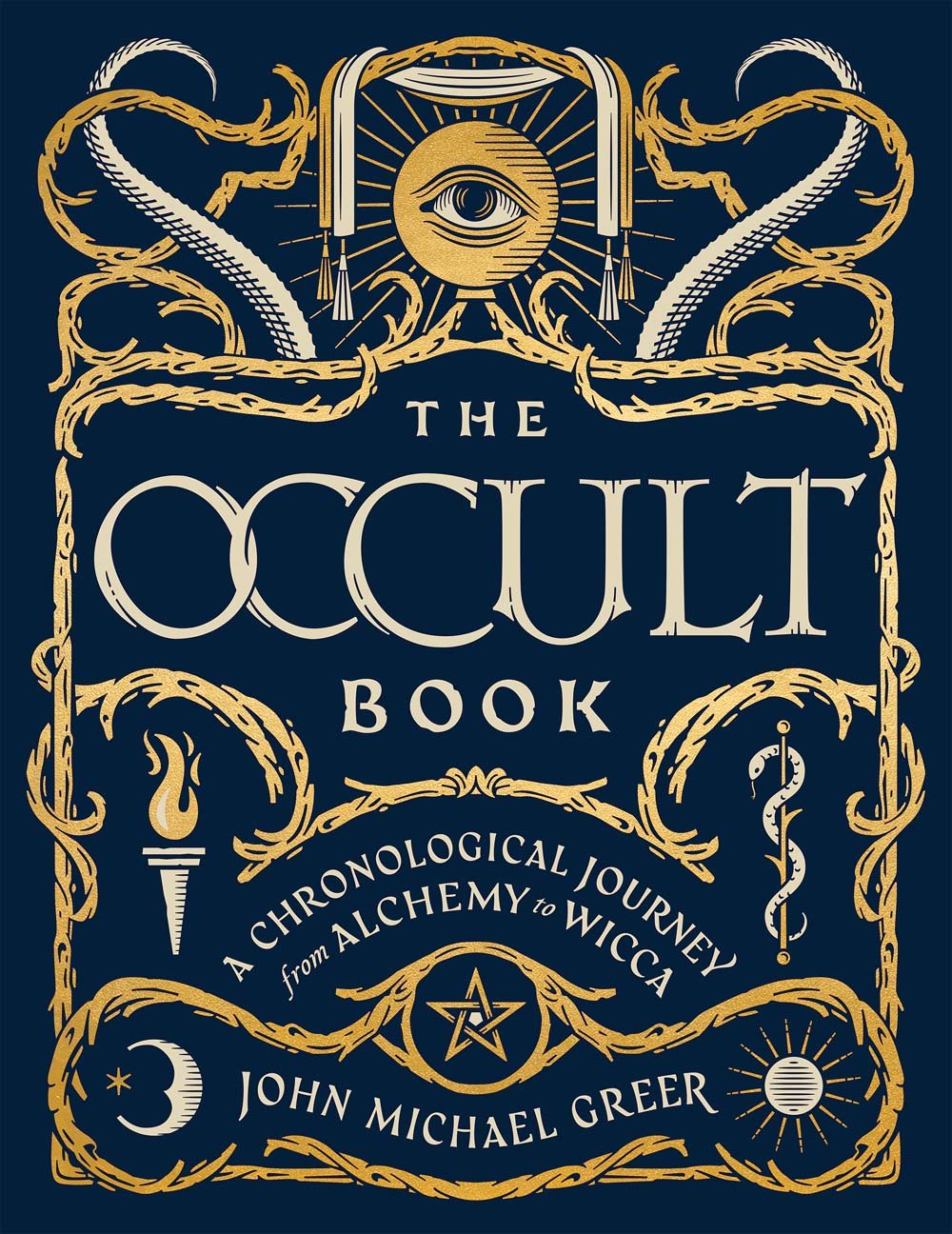
The Occult Book: A Chronological Journey from Alchemy to Wicca
Welcome, dear seeker. I’m Amira Asmodea, here to guide you gently through the intriguing and shimmering world of occult lore. This is a journey not just through time but through the very heart of magic itself — from the shadowy workshops of alchemists to the vibrant circles of modern Wicca. Let’s step together into this labyrinth where wisdom, mystery, and ritual intertwine.
Explore the occult from ancient times to the modern day with one of its most respected scholars and practitioners.
Take an enlightening journey through occult history, exploring 100 dramatic incidents, arcane knowledge, and key historical figures from around the world. John Michael Greer delves into two millennia of tradition, from the earliest alchemists to pagan rituals; from the Philosopher’s Stone to Cabala, the first tarot, and the Knights Templar; and from the first horoscopes to fortune-telling trials and the birth of modern witchcraft, or Wicca. Each entry features a stunning image or intriguing item of ephemera.
What this journey reveals
At its core, the occult is about hidden knowledge — knowledge just beyond the veil of ordinary sight, requiring curiosity, dedication, and a touch of courage to uncover. John Michael Greer’s approach in this book is especially insightful because it doesn’t just string together dry facts, but tells the stories of real people, mystical places, and magical practices that have shaped occultism through the ages.
In my experience, understanding these historical threads helps deepen your own practice, whether you’re drawn to candle magic, herbalism, or the enigmatic power of sigils. For instance, the alchemists weren’t just proto-chemists trying to make gold. They were seekers of spiritual transformation, viewing their work as both physical and mystical, aiming for the so-called Philosopher’s Stone — a symbol for ultimate enlightenment.
Alchemy: The mystical roots
Alchemy began as a blend of science, philosophy, and spirituality. In many traditions, this secret art was about more than transmuting metals; it was and still is about transforming the self. The medieval and Renaissance alchemists encoded their knowledge in cryptic symbols and stories, much like how modern witchcraft often hides its wisdom in symbols like pentacles, herbs, and candles.
Many practitioners believe that alchemy laid foundational ideas for later occult arts, including astrology and certain types of ritual magic.
The rise of tarot and Cabala
The tarot’s beginnings are woven with mystery. Early decks from the 15th century served as playing cards but soon collected deeper meanings tied to spiritual journeys, psychology, and divination—tools that help us connect with the unseen and understand our inner worlds.
Cabala, or Kabbalah, offers another ancient thread, a mystical interpretation of sacred texts rooted in Jewish tradition. It unlocks symbolic meanings of letters and numbers, believed to connect us with divine energies and universal truths. Both tarot and Cabala represent ways humans have sought to read the invisible threads holding the universe in balance.
The Knights Templar and occult symbolism
The Knights Templar, a medieval order shrouded in mystery, often appear in occult tales. Their secretive rituals, combined with legends of lost treasures and hidden wisdom, have inspired many mystical and magical movements. They remind us how organizations can carry and protect esoteric knowledge through turbulent times.
From horoscopes to modern witchcraft
Astrology — the reading of horoscopes — is one of the oldest occult practices and yet remains deeply popular today. This art helps practitioners attune to the rhythms of the cosmos, providing a map of personality, destiny, and timing. Its endurance demonstrates the human desire for connection with the skies and fate.
And then we come to Wicca — the acclaimed form of modern witchcraft that blossomed in the mid-20th century. Wicca weaves together many strands of older pagan traditions, ceremonial magic, folklore, and even the philosophical underpinnings of the occult. It offers a vibrant, nature-centered path that many find both spiritual and practical.
Candles, herbs, sigils and everyday magic
Understanding this timeline helps ground your own magical practice in a larger story. Whether you’re lighting a candle to honor a deity, using herbs for protection, crafting sigils to manifest intentions, or simply calling on ancestral wisdom — you’re participating in a tradition carried by countless seekers throughout history.
For example, many witches use herbs like rosemary for cleansing, or lavender to draw in love. Candles, with their flickering flames, become symbols of transformation and invocations. Sigils, which are designed symbols charged with intention, remind us how words and images hold power beyond the ordinary.
Questions readers often ask:
How can I start exploring the history of occult practices?
Begin with stories and biographies — learning about figures like the alchemists, tarot scholars, or influential witches can open doors. Books like the one by John Michael Greer offer a panoramic view that is easy to connect with.
Is alchemy still relevant to modern magic?
Absolutely. Many practitioners see alchemy as a metaphor for inner transformation — the magical process of refining the soul, not just metals. It reminds us that every spell or ritual is ultimately about change and growth.
How does Wicca relate to older pagan traditions?
Wicca draws from various ancient beliefs and rituals but adapts them for contemporary life, emphasizing harmony with nature, cycles, and personal empowerment. It’s often called a revival or reinvention, rooted deeply in older magical currents.
You can also keep exploring tarot with these free tools:
As you leaf through the pages of John Michael Greer’s fascinating book, remember that every story, symbol, and ritual is a thread in the great tapestry of occult wisdom — one you’re weaving into your own life as you explore magic’s many doors.
May your path be bright and your spirit curious. Keep wandering, keep wondering, and above all, keep the flame of your magical heart alive.
Bibliography
- Knight, Gareth. A History of White Magic. Illustrated reprint, Skylight Press, 2011, 207 pp. ISBN 9781908011046. Google Books.
- Hall, Judy. The Crystal Bible Volume 2. Godsfield Press, 2009. ISBN 9781841813509. Source.