Living Wicca: A Further Guide for the Solitary Practitioner
Greetings, dear seeker. I’m Amira Asmodea, and it’s a joy to welcome you to this space where the old ways meet our every day. If you’ve ever felt drawn to walk the Wiccan path alone—a solitary practitioner forging your own sacred rhythm—then Scott Cunningham’s Living Wicca: A Further Guide for the Solitary Practitioner may already feel like a wise companion.
In my experience, solitary Witchcraft is a deeply personal practice. It’s a way to tune entirely into your own spiritual voice, crafting rituals and magic that resonate with your heart. But sometimes we need guidance, a gentle hand to help us explore the depths, and that’s where Cunningham’s classic does its real work.
Living Wicca, beloved by thousands with over 200,000 copies sold, offers exactly that. It’s more than a book—it’s a lantern in the darker parts of the path, shedding light on the questions and challenges many solitary witches face as they embrace this ancient, yet ever-new, spiritual journey.
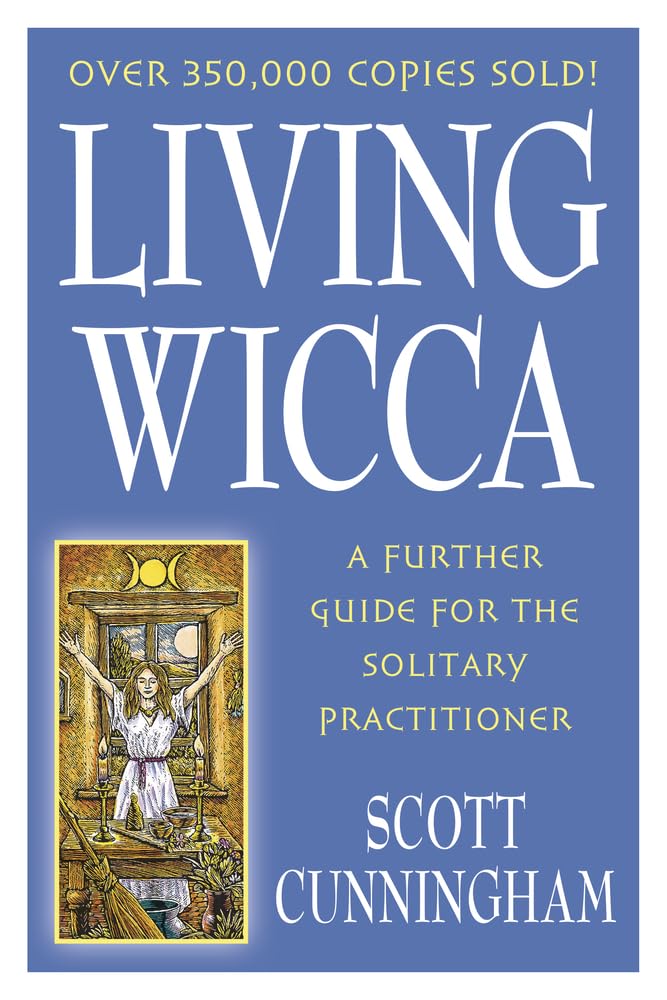
One of the heartening truths Cunningham shares is how Wicca is not a rigid set of rules handed down on tablets, but a living, breathing tradition you can shape for yourself. This book invites you to explore your own magical style, learning to create rituals that speak authentically to your spirit. It explains how to design and use your own symbols—those secret marks and signs that carry power because you’ve imbued them with intent and meaning.
Many practitioners find that developing a Book of Shadows becomes a treasured part of their path. Traditionally, this book holds your personal spells, reflections, rituals, and insights—a sacred journal of your evolving magic. Cunningham offers guidance on creating one uniquely your own, making it a spiritual diary that grows alongside you.
Living Wicca also delves into magical names and titles, a subject that might spark your curiosity or even hesitation. Taking a magical name can feel like stepping through a veil, adopting a new identity that aligns with your crafted self and spiritual purpose. Whether you become a priestess, a high witch, or simply a dedicated solitary—the choice is yours, and Cunningham gently outlines how to honor that ceremony within your own sanctum.
And what about the tools of the craft? You’ll find accessible explanations about the traditional Wiccan tools—athame, wand, chalice, pentacle—and how to treat them not as mere objects but as extensions of your energy and will. This can be especially helpful when you’re starting out alone and might feel uncertain about what to use or why.
As dark and mysterious as magic may seem, Cunningham reminds us about the importance of secrecy on this path. Many witches, especially solitaries, protect their practice through discretion, wielding their power quietly to maintain its potency and to safeguard themselves in a sometimes skeptical world.
Perhaps most intriguing is the deep dive into the Mysteries—those ancient spiritual truths wrapped in symbolism and ritual. Cunningham honors the delicate balance between revelation and secrecy, encouraging solitary witches to pursue knowledge patiently, with respect for the tradition’s depth and personal readiness.
Beyond the practical, Living Wicca opens up a view into the Wiccan worldview: a philosophy of harmony, respect for nature, and the joyful celebration of cycles—be they lunar, seasonal, or those of our own lives. Many practitioners find this perspective nourishing, a kind of magical ecology that uplifts both the self and the world around us.
If you’re wondering about the many symbols you might encounter, Cunningham presents over 120 Wiccan symbols throughout the book. These range from the well-known pentacle to more subtle sigils carrying specific meanings. In my experience, working with symbols is a bridge between the seen and unseen, a way to speak feelings and power words alone cannot capture.
What about crafting your own rituals? The book doesn’t just describe ceremonies; it invites you to imagine and build your own sacred moments. One solitary witch might find joy in a candlelight ritual to honor the moon’s phases. Another may create a simple morning offering to the elements. Living Wicca provides a philosophical foundation to empower these personal creations.
Now, questions often arise:
Questions many seekers ask
Do I need a group or coven to practice Wicca?
Not at all. Solitary practice has a long, respected history. Living Wicca is a guide especially for those who choose to walk the path alone, offering tools and wisdom to help you stand confident in your magic.
What if I don’t feel connected to all traditional symbols or tools?
That’s perfectly natural. Cunningham encourages witches to adapt their craft. Use what resonates and feel free to innovate, for the most powerful magic is that born from your genuine belief.
Is it necessary to memorize magical names or secret teachings?
These are parts of the tradition that some embrace fully, while others keep simple. The book offers insights but always leaves the choice to your intuition and comfort.
How does secrecy fit into a solitary practice?
Secrecy and discretion protect not only you but also the integrity of your work and the magic itself. It’s about safeguarding your personal power and respecting the sacredness of the craft.
Living Wicca is more than a manual; it’s a philosophical companion that respects the journey’s complexity and joys. Whether you’re crafting sigils, meditating with herbs, or pondering the mysteries of the cosmos, this guide encourages you to claim your own magic with courage and grace.
If this speaks to your heart, I invite you to spend time with Living Wicca and explore the many facets of solitary Witchcraft it illumines. For more insights and recommendations, be sure to check the full list of the Top books for witches on my website. May your path be lit with wisdom and wonder.
Blessings,
Amira
Bibliography
- Gardner, Gerald. The Gardnerian Book of Shadows. Bhoomi Digital Apps, 2016. Source.