Scarab, amulet of the ancient Egypt
Hello, dear seeker. I’m Amira Asmodea, and I’ve long been fascinated by symbols that hold deep magic beneath their surface. Today, let’s journey far back to ancient Egypt and explore the scarab—the humble dung beetle that became one of the most cherished amulets of that mysterious land.
When you think of ancient Egypt, it’s nearly impossible not to feel a certain shiver of mystery, that whisper of hidden knowledge and sacred secrets buried beneath millennia of sand. The builders of the pyramids, the magicians and priests, lived in a world where magic intertwined with daily life. Their power wasn’t just in words or herbs—it was in the symbols they wore, carried, and lived through.
Among these symbols, the scarab amulet stands out as a beacon of hope, protection, and transformation. So what was it, really? Why did the ancient Egyptians hold this simple beetle in such reverence?
The scarab: small beetle with great meaning
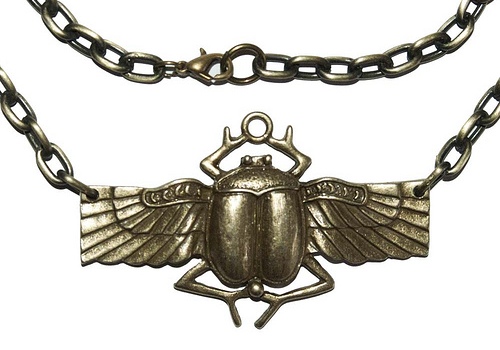
The scarab amulet represents the dung beetle, an insect which to modern eyes might seem unremarkable, yet to the Egyptians it was nothing less than a living symbol of the sun and of creation itself. Traditionally, this scarab was connected with the god Khepri, a form of the sun god Ra, who embodied the rising sun each morning—a brand-new beginning, a daily rebirth of life and energy.
In this way, the scarab was much more than a mere decoration. The Egyptians believed the beetle pushing a ball of dung across the sand mirrored the sun’s journey across the sky. As the beetle seemed to “create” life by rolling and burying these balls, so too did Khepri create existence from nothing. This natural cycle inspired a deep spiritual metaphor of constant renewal, transformation, and the eternal dance of life and death.
Wearing or carrying a scarab amulet was thought to protect the bearer from both seen and unseen dangers, offering strength and energy through each day. In my experience, symbols take on power the more we connect emotionally and spiritually to their meanings—and the scarab is no exception. Grounding oneself with such an amulet can be a daily reminder of resilience and renewal.
The scarab and eternal life
When placed with the dead, scarabs were thought to help the departed rise again, reaching the eternal afterlife that so deeply permeated Egyptian spirituality. This explains why many tombs and burial items featured these amulets, as they symbolized hope for resurrection and continued existence beyond the mortal realm.
This belief offers a broader lesson to us all: that life is a cycle, always transforming. Struggles, endings, and beginnings are all part of that sacred wheel, and with the scarab’s symbolism, one is reminded of the chance to start anew, no matter one’s past.
Crafting and materials
Scarabs were crafted in many materials depending on status, occasion, or intended use. Soapstone, basalt, granite, amethyst, carnelian, and even gold—all found their place in creating these wondrous amulets. Their small size made them perfect for necklaces or rings, carrying their power close to the heart.
Large scarab sculptures were also common in temples such as those in Thebes or Alexandria’s Serapeum, standing as monumental guardians of sacred spaces.
How might the scarab inspire us today?
In modern spiritual or magical practice, the scarab can be a beautiful talisman for protection, transformation, and even progress. Whether you carry a small stone scarab or simply reflect on its symbolism, it invites us to recognize that we hold within ourselves the power to roll our own ‘ball of life’ forward—transforming challenges into growth.
Light a carnelian candle, anoint your amulet, or simply meditate on the scarab’s image to call in renewal and new energy.
Reader questions often asked:
Can anyone use a scarab amulet, or is it tied only to Egyptian practitioners?
While the scarab originates from ancient Egyptian culture, its symbolism is universal. Many modern witches and spiritual practitioners incorporate it for its meanings of transformation and protection, regardless of their background. As always, a respectful approach honors its origins.
Are scarab amulets suitable for protection against negative energies?
Yes, traditionally scarabs were worn or carried to shield the wearer from harm, both physical and spiritual. In my experience, focused intention combined with such symbolic tools greatly enhances one’s sense of safety.
Is it important what material the scarab is made from?
Each material carries its own energetic qualities—carnelian might bring courage, amethyst calm, gold abundance. Choosing a scarab made of a stone or metal that resonates with you adds personalized power to the talisman.
Final thoughts
The scarab stands as a timeless reminder from one of history’s most magical civilizations. It teaches about the cycles of life, protection from adversity, and the power to reinvent ourselves day by day. I invite you to hold this symbol gently in your heart and let its ancient magic guide your own journey of growth and resilience.
Thank you for joining me on this little walk through ancient sands and mystic insight. May the scarab’s blessings be with your spirit always. For more explorations into the world of symbols, magic, and ritual, do stay tuned to Amira Asmodea’s offerings.
Bibliography
- Hall, Judy. The Crystal Bible Volume 2. Godsfield Press, 2009. ISBN 9781841813509. Source.
- Budge, E. A. Wallis. Amulets and Superstitions. Oxford University Press, H. Milford, 1930, xxxix + 543 pp. Source.
- Johnston, Jay. Amulets in Magical Practice. Elements in Magic, Cambridge University Press, 2024, 80 pp. DOI 10.1017/9781108953412. Online ISBN 9781108953412. Cambridge Core. Source.