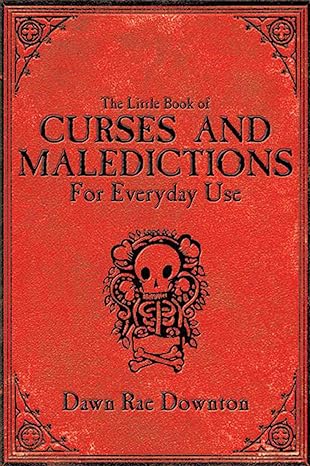
The Little Book of Curses and Maledictions for Everyday Use
Greetings, dear reader. I’m Amira, your guide on this path through the shadowed corners of everyday life—where frustration, annoyance, and even a little resentment can brew. We all face moments when the world feels stacked against us, and though we might not wish harm on others, a little protective magic or a well-directed curse can sometimes bring relief or justice in ways words alone cannot.
Learn how to place spells, incantations, hexes, and more. Here are 50 custom maledictions for situations you run into every day, and for people you know and wish you didn’t.
Gas prices. Traffic. Your boss. Your former boss. Your coworkers. Your crush. Doctors. Customer service. Who can you call to get that monkey off your back? You can’t call anyone because they won’t return your calls. Isn’t it time to have a little ammo of your own?
The Little Book of Curses and Maledictions puts the power back in your hands with its user-friendly, step-by-step instructions to:
- Generic Revenge Curses
- Custom Revenge Curses
- Warning Curses
- Repudiation Curses
- Self-Curses
- And more!
Authentic, ancient curses from around the world are tweaked for easy, contemporary use. The book covers the four essentials for practicing any kind of magic: what to do and say, what materials to use, what frame of mind to be in, and what limits to set. In some cases it even matters where you are when you set your curse, what time of day it is, and who’s around.
The art of cursing has long been misunderstood. It’s not always about harm—it’s about setting boundaries, asserting your needs, and reclaiming your energy. In my experience, a curse is powerful when it comes from a clear intention, a balanced heart, and respectfully honors the natural laws of cause and effect. This is why knowing your limits and your reasons before setting a curse is just as important as the words you speak.
Think of curses and maledictions as magical ways to address everyday irritations that wear us down, like “bad luck” that seems to follow certain people or circumstances. When words feel useless and diplomacy has failed, the language of intent through magic can shift energies subtly yet meaningfully. For example, a warning curse might serve as a mystical red flag to discourage repeated disrespect without causing lasting harm.
Many practitioners believe that where and when you perform a curse is a crucial part of its effectiveness. The right setting—perhaps a quiet crossroads at midnight, a full moon night, or a new moon’s fresh energy—can amplify your will and focus. Some rituals call for particular herbs, candles, or symbols to be present to align with the energies you wish to activate. I’ve found that preparing yourself by grounding and centering your spirit before any spellwork opens the door for clearer, more respectful magic.
Let’s break down some of the types of curses you might encounter and why you might choose one:
- Generic Revenge Curses are useful when you face a vague but ongoing nuisance—think of a pesky competitor or constant troublemaker at work.
- Custom Revenge Curses feel more personal; tailored to someone specific, like a former lover or a dishonest business partner, but still designed carefully so they don’t spiral out of control.
- Warning Curses act as gentle but firm signals, reminding someone they’re treading on thin ice and might face consequences if they continue.
- Repudiation Curses help to sever ties—be it with toxic ideas, relationships, or energy—clearing space for renewal.
- Self-Curses are rare but can be a way to hold oneself accountable or to work through internal conflicts and self-sabotage, though they require care and deep reflection.
It’s easy to feel alone when the world tosses you curveballs. But with a thoughtfully crafted curse or malediction, you reclaim a little control and dignity. Remember, these practices are tools in your spiritual toolkit, to be used wisely and kindly. If you’re ever uncertain, start with spells of protection or cleansing before moving onto curses.
To illustrate, here’s a simple example of a mild curse that could be adapted for a frustrating workplace colleague:
"May their words be tangled like the thorny brambles, making them pause before speaking ill. May patience shade their heart, softening hasty tongues, and wisdom walk beside their feet."
Such a spell invites introspection rather than harm, nudging change through gentle discomfort rather than blatant aggression.
Of course, every situation and person is unique. Sometimes, you may find that a cleansing ritual with herbs like rosemary or sage, or lighting a candle inscribed with protective sigils, is more effective than a curse. Every practitioner walks their own path.
If you ever wonder, "Is it right for me to place a curse?" or "How do I protect myself from magical backlash?" these are questions I hear often. The key is always respect for yourself, others, and the unseen forces you call upon. Setting clear intentions, choosing personal limits, and practicing protective spells alongside curses can keep your magic balanced.
So, dear friend, if you’ve ever wished for a way to shift your everyday annoyances into something empowering, The Little Book of Curses and Maledictions offers you that gateway. It’s not just about wielding power but about understanding it with care.
I invite you to explore these ancient tools renewed for modern magic. Let them serve as your allies in creating the life you deserve, framed by wisdom and heart.
Thank you for sharing this time with me. Keep exploring, keep protecting, and may your journey through magic be as rich and real as life itself.