The Book of Black Magic and of Pacts: Review and Overview
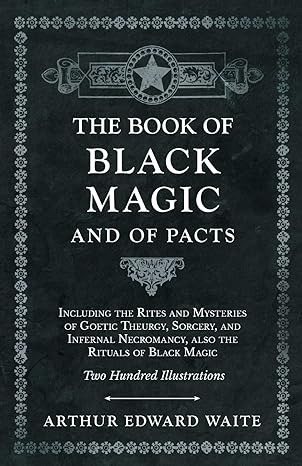
Greetings, dear seeker. I’m Amira Asmodea, and today we delve into a tome that has fascinated occult souls and curious readers alike for well over a century. The Book of Black Magic and of Pacts; Including the Rites and Mysteries of Goetic Theurgy, Sorcery, and Infernal Necromancy, also the Rituals of Black Magic is no ordinary grimoire. It is a sprawling anthology of magical lore, ritual instruction, and mystical ideology — all gathered by the scholarly hand of Arthur Edward Waite, a man whose influence still whispers through tarot decks and magical circles today.
At its heart, this book is a carefully assembled guide to the darker arts, a manual of sorts for those who wish to explore the ancient rituals and rich traditions of ceremonial magic. Originally published in 1898, it remains one of the most comprehensive overviews of occult practices, collecting a vast array of spells, rites, and evocations from diverse, often rare sources.
What is The Book of Black Magic and Pacts about?
Simply put, it is an encyclopedic volume that explores the literature, rituals, and mysteries associated with what Waite described as "black magic" — a term laden with historical weight and spiritual nuance. But beyond the sensational name, the book provides insight into ages-old ceremonies, methods of invocation, and the philosophy underpinning goetic theurgy (communication with spirits), sorcery, and what’s called infernal necromancy — or the summoning of spirits from the other side.
Why does this book matter to modern witches and occultists?
In my experience, and from the whispers of many practitioners, this book serves as both a historical artifact and a practical reference. Its pages chronicle the evolution of magical rites, offering a sense of continuity with traditions that might otherwise be lost to time. The rituals contained within are more than mere spells; they are gateways to understanding how magic interacts with human intention and spirituality.
If you’re drawn to ceremonial magic, to sigils, or to working with spirits—and even if you approach these arts cautiously—the book offers a window into the mindset and methods of past mystics. It helps us see that magic is as much about the journey and the symbolism as it is about the outcomes we seek.
What does the book contain?
The scope is impressively wide. Waite organizes the contents into several thematic areas that provide both practical instruction and contextual background:
- The Literature of Ceremonial Magic: An overview of the written traditions that have shaped ritual magic over centuries.
- The Antiquity of Magical Rituals: Exploring the ancient roots and cultural origins of specific rites.
- The Rituals of Transcendental Magic: Guidance on ceremonies aiming to connect the magician with higher spiritual realms beyond the physical.
- The Rituals of Black Magic: Methods and incantations traditionally associated with darker or more intense magical workings.
- The Initial Rites and Ceremonies: Entry-level or foundational rituals that prepare one for deeper magical practice.
- Concerning the Descending Hierarchy: The hierarchy of spirits and forces involved in various ceremonies as understood in traditional occultism.
- The Mysteries of Infernal Evocation According to the Grand Grimoire: Secrets and rites from one of the most infamous magical manuals, detailing ways to call upon infernal spirits.
- The Method of Honorius: Classic procedures attributed to the medieval magician Pope Honorius, emphasizing spiritual communication.
- Miscellaneous and Minor Processes: Various smaller rites and magical acts that complement larger ceremonies.
- Concerning Infernal Necromancy: The doctrine and practices related to summoning and communicating with the departed or otherworldly beings.
How can this book enrich your spiritual journey?
Reading The Book of Black Magic and Pacts is not like opening a modern spell-book with step-by-step instructions for quick results. Instead, it invites you to witness the complexity and depth of magical traditions as they’ve been experienced over time. In my experience, approaching such work with respect and discernment is essential. The book encourages the practitioner to think of magic as a structured practice embedded in philosophy and ritual discipline, rather than casual dabbling.
The spiritual interpretation here is profound. The trials and ceremonies, the pacts and rites, speak to a human longing to connect with forces greater than ourselves — whether we call them spirits, angels, demons, or simply energies of nature and beyond. Waite’s compilation reminds us that magic has always been about relationship: between the human soul and the unseen, between intention and manifestation.
Questions readers often ask
Is this book suitable for beginners? The book is quite dense and historically layered, so beginners might find it challenging. However, if you have an interest in ceremonial magic and are willing to read thoughtfully or seek guidance, it can be a powerful resource. Remember, some of the material references older terminology and practices; take your time to understand and interpret it thoughtfully.
Does it promote 'evil' or harmful magic? Waite’s text is more about documenting the black magical traditions — the term "black magic" historically overlaps with what was considered forbidden or taboo, not necessarily evil in the simplistic sense. The book should be approached as a historical and spiritual exploration, not as an encouragement to cause harm.
Can the rituals be adapted to modern practice? Absolutely. Many practitioners find ways to draw inspiration from these rites, adapting the symbolism and structure to their own paths. The essence is often more about the connection and intent than the exact old formulas.
Where can I start exploring after this book? Alongside this volume, I recommend exploring tarot, sigils, and gentle daily magic practices that feel safe and empowering. There are wonderful free tools available online to deepen your understanding of mystical symbols and readings.
You can also keep exploring tarot with these free tools:
As we finish this reflection on a work so steeped in magical tradition, I invite you to approach these mysteries with both courage and care. The occult is not just a set of secrets — it’s a mirror to the deeper parts of ourselves and the world around us. May your journey be blessed with insight and wonder.
Bibliography
- Zambelli, Paola. White Magic, Black Magic in the European Renaissance: From Ficino, Pico, Della Porta to Trithemius, Agrippa, Bruno. Studies in Medieval and Reformation Traditions, vol. 125, Brill, 2007, x + 282 pp. ISBN 978-90-04-16098-9. Cambridge Core. Google Books.
- Miller, Jason. Protection & Reversal Magick: A Witch's Defense Manual. Revised and updated edition, Weiser Books, 2023, 224 pp. ISBN 978-1-57863-799-7. Google Books.
- Doreen Valiente. An ABC of Witchcraft Past and Present. Robert Hale, an imprint of The Crowood Press, 1999. ISBN 9780719826917.