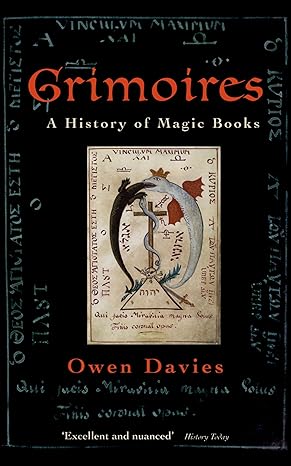
Grimoires, A History of Magic Books - Owen Davies
Welcome, dear seeker. I’m Amira Asmodea, and today I want to share a glimpse into the mysterious, alluring realm of grimoires—those magical books that have both fascinated and frightened readers for centuries. If you’ve ever wondered what secrets lie within these ancient volumes or how they influenced the practice of magic throughout history, you’re in the right place.
Simply put, grimoires are books of magic. But they are much more than dusty old tomes filled with cryptic symbols. These are repositories of ancient wisdom, practical spells, charms, and rituals, passed down and adapted over generations. They serve as guides for making talismans, creating protective amulets, healing ailments, attracting love, or warding off negative energies. And yet, they have also been seen as dangerous—housing incantations to control others or even summon dark forces.
Owen Davies’ illuminating work, Grimoires: A History of Magic Books, dives deep into this secretive genre, tracing its roots all the way from the ancient Middle East to modern America. What I find particularly compelling about his study is how it paints grimoires not just as books of magic, but as powerful cultural artifacts. They reveal how magic and magical writing have shaped civilizations, influenced religious developments, and contributed to the spread of literacy and ideas in the Western world.
Let’s unpack this a little more. In many traditions, grimoires were much more than manuals; they were sacred texts containing knowledge kept hidden from the uninitiated. For example, some grimoires teach how to craft talismans—objects believed to hold protective or luck-bringing powers. These could be anything from a simple ring inscribed with a sigil (a magical symbol) to an elaborate amulet worn to ward off illness or danger.
Others are full of charms and spells meant for practical concerns—finding love, boosting wealth, calming troubled spirits, or healing common ailments. In my experience, spells that draw on this kind of traditional knowledge often work because they align intention with symbolic action. Lighting a particular candle color, combining herbs, or reciting a simple charm can focus your mind and spirit toward your goal.
But it’s also true that some grimoires promised knowledge considered darker, even feared. Pages might include conjurations to call upon spirits or entities, control others’ wills, or summon beings many would shy away from. This dual nature of grimoires—as containers of both light and shadow—adds layers to their mystery and power. It also explains why for so long they were banned, hidden, or destroyed by religious and civil authorities.
What Davies’ book also highlights is the resilience and adaptability of grimoires. They have changed across time and place, reflecting the beliefs and needs of each culture that embraced them. For instance, medieval grimoires often combined Christian prayers with older magical customs, showing a blend of faith and folk practice that reveals much about everyday people’s spirituality of the era.
Today, grimoires continue to inspire practitioners of magical arts, and many modern witches and occultists treasure these grimoires as sources of guidance and connection with past wisdom. They remind us that magic is not just fantasy—it’s a living tradition rooted in history, culture, and the human yearning to understand and shape the unseen world.
Some questions curious readers often wonder:
- Are grimoires just superstition or real magic?
Most practitioners see grimoires as manuals of symbolic practice. In other words, the magic lies in the intention, ritual, and focus they inspire, rather than in any literal supernatural effect. The power of a grimoire’s words comes alive through belief and action. - Is it safe to use old grimoire spells today?
Traditionally, many spells emphasize protection, healing, or blessing—so they are generally safe when approached with respect and clear intention. However, it’s always wise to be cautious with any work that involves summoning or controlling others. - Can anyone learn from grimoires?
Absolutely. Many practitioners, myself included, find that studying these ancient texts enriches our practice and connects us to a wider magical heritage. Of course, some texts use complex language or symbolism, but with patience and curiosity, anyone can access their wisdom.
Whether you consider them mystic guides, historical curiosities, or powerful tools, grimoires hold an undeniable place in the world of magic. They invite us to explore a heritage of magic that continues to evolve and inspire.
If this peek into the world of grimoires has sparked your interest, I encourage you to read Owen Davies’ book for a fuller journey through their history and impact. There’s much more to discover about how these magical books have shaped civilizations and continue to influence us today.
May these words light your path, and may your own magical journey be rich with discovery.
With all my warmth and magic,
Amira Asmodea
Bibliography
- Owen Davies. Grimoires - A History of Magic Books. Oxford University Press, 2009. ISBN 9780199204519.
- Waite, Arthur Edward. The Book of Ceremonial Magic. William Rider & Son, 1911. Source.
- Joseph H. Peterson. Grimorium Verum. Citadel Press, 2007. Source.
- Mathers, S. L. MacGregor, trans. and ed. The Grimoire of Armadel. Routledge & Kegan Paul, 1980. ISBN 9780710000835. Source.
- Stephen Skinner & David Rankine. The Veritable Key of Solomon. Other Books, 2000. ISBN 9780954763923.