The Book of Forbidden Knowledge: Black Magic, Superstition, Charms, and Divination
Greetings, dear seeker. Amira here, inviting you to peer with me into a volume that has captured the imagination of many who walk the winding paths of magic and mystery: The Book of Forbidden Knowledge. This fascinating work, crafted between the late 1800s and early 1920s, offers a rare glimpse into the tangled web of occult practices—a curious jewel that bundles black magic, superstition, charms, and divination in one tidy, though enigmatic, package.
Unlike many grimoires or occult guides from that era which tend to single out one focus—be it talismanic magic or folk healing—the Book of Forbidden Knowledge is a tapestry of many threads woven together. It doesn’t just whisper secrets about summoning spirits or crafting charms; it also walks alongside the traveler through fortune telling and old-world remedies. This blend prompts us to see it less as a traditional grimoire and more as a kind of modern compendium or one-stop guide to the occult curiosities of its time.
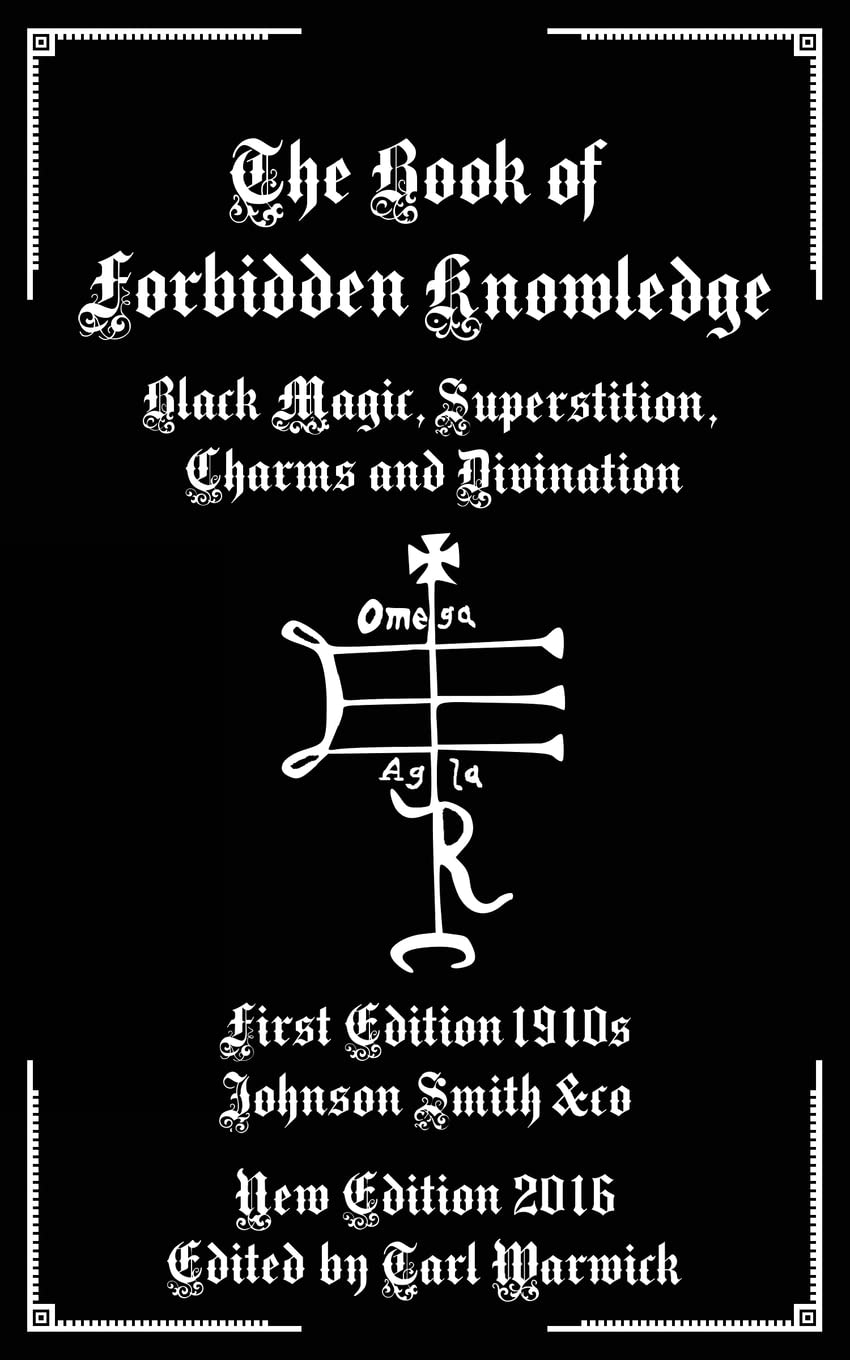
So, what exactly is contained within these pages that mark it as "forbidden"? For many, the word black magic might conjure images of shadowy rites or malevolent sorcery, but this book’s scope is broader and more nuanced. It includes ceremonial practices alongside simpler folk charms, perhaps aimed more at everyday protection and luck than dark dealings. This mix reflects the period’s fascination with mysticism and the boundaries of belief, especially as science and superstition often overlapped in the popular imagination.
In my experience, the charm and power of such a volume lies not only in the spells or talismans themselves but in understanding how belief flows through culture and time. The book captures a moment when people sought to draw some control or understanding from the unseen forces shaping their worlds—whether through mesmerism, or hypnotic techniques believed to heal the mind; through talismans meant to ward off harm; or through divination methods offering glimpses into uncertain futures. It is a crossroads of magical practice and folklore.
Many practitioners who turn to grimoires like the Book of Forbidden Knowledge appreciate this holistic approach. One isn’t just learning to cast a spell or read a card; one is diving into a worldview where mystery and the mundane mingle. This merging reminds us that magic, at its heart, is often about connection—to spirit, to nature, to tradition, and to our own inner wisdom.
To give a practical example, you might find instructions on crafting a charm for protection alongside advice on performing a simple divination using items found around the home. Or you may encounter descriptions of folk remedies passed down through generations, tied to the rhythms of the seasons and the phases of the moon. These are not just curious relics; they offer pathways for those seeking to enrich their craft in ways both old and new.
Spiritually speaking, this blending of black magic and superstition challenges us to revisit our assumptions about what is "dark" or "light." Often, what is labeled as black magic can be an umbrella term for any magic working with deeper, less understood forces rather than inherently harmful acts. At the same time, superstition—the everyday beliefs and signs people trust—reminds us that magic lives not just in ceremony but in the stories and symbols we carry daily.
Questions readers often ask
Is the Book of Forbidden Knowledge dangerous or taboo to use?
Traditionally, the "forbidden" in the title warns of knowledge considered sensitive or hidden, but it doesn’t mean you should fear the book. Rather, it invites respect for the practices within—encouraging careful approach and mindful study. Many practitioners view it as a source of wisdom rather than something hazardous.
How does this book compare to other grimoires?
Many grimoires focus on strictly ceremonial magic or specific rites. This book’s charm lies in its inclusiveness, offering a broad survey rather than a specialized manual. It can be seen as a marvelous gateway for those curious about a variety of occult arts encapsulated in one volume.
Can I use the spells and charms from this book today?
Absolutely, with intention and adaptation. While some directions might feel outdated or strange, the core principles of focusing your will, using symbols, and respecting energies remain timeless. Many practitioners today find inspiration in such texts to customize their own rituals.
For those of you intrigued by the crossroads of magic and life’s mysteries, the Book of Forbidden Knowledge offers a rich trove to explore. Whether you’re drawn by its black magic sections or fascinated by its folk charms, it remains a remarkable record of the occult’s place in a changing world.
Thank you for accompanying me on this brief journey through a book that still whispers to seekers across time. Stay curious, and may the old wisdom find new roots in your practice. If your path calls you, there are many more wonders to uncover in the realms of witchcraft and magic here with me. I hope you'll keep reading along.
Bibliography
- Zambelli, Paola. White Magic, Black Magic in the European Renaissance: From Ficino, Pico, Della Porta to Trithemius, Agrippa, Bruno. Studies in Medieval and Reformation Traditions, vol. 125, Brill, 2007, x + 282 pp. ISBN 978-90-04-16098-9. Cambridge Core. Google Books.
- Miller, Jason. Protection & Reversal Magick: A Witch's Defense Manual. Revised and updated edition, Weiser Books, 2023, 224 pp. ISBN 978-1-57863-799-7. Google Books.
- Doreen Valiente. An ABC of Witchcraft Past and Present. Robert Hale, an imprint of The Crowood Press, 1999. ISBN 9780719826917.
- Budge, E. A. Wallis. Amulets and Superstitions. Oxford University Press, H. Milford, 1930, xxxix + 543 pp. Source.