What Is Umbanda?
Welcome, dear seekers. I am Amira Asmodea, an elder witch who has long walked the paths between worlds, and today we’re exploring a tradition vibrant with spirit and history: Umbanda. This isn’t just a religion; it is a living tapestry woven from many threads—African drums, Indigenous whispers, Catholic prayers, and Spiritist teachings. Let me guide you through its heart and soul.
What exactly is Umbanda?
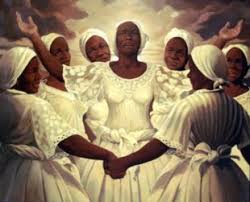
Umbanda is a spiritual tradition that sprang up in early 20th-century Brazil. In my experience, it is best understood as a syncretic and eclectic practice, meaning it draws from many sources and blends them to form a living, breathing faith. Picture a circle where African deities, Indigenous spirits, Catholic saints, and Spiritist philosophy clasp hands in unity. This union allows practitioners to engage with the divine in a very intimate, personal way.
Many practitioners recognize Umbanda as a form of spiritualism merged deeply with esoteric practice. It weaves together Spiritism—a belief system inspired by Allan Kardec’s teachings about spirits and their communication with the living—with the African religions, particularly those brought by the Bantu people, along with the ancient traditions of Brazil’s Indigenous Tupi peoples. This blend isn’t accidental; it’s a natural evolution born from the cultures meeting and mingling over centuries.
A Journey Through Time: The History of Umbanda
Umbanda’s roots stretch deep, feeding from the soil of ancient Africa and the sacredness of Indigenous Brazil. Before colonial powers imposed their religion and culture, native peoples practiced a rich spirituality that honored spirits of nature and ancestors. When African slaves and freed peoples arrived, they brought their own gods, rituals, and beliefs. These traditions weren’t lost; instead, they shone brighter when combined with the dominant Catholic influence and Spiritist doctrines that became popular in Brazil during the 19th century.
This blending, known as syncretism, was a response to necessity and creativity. African and Indigenous religions had to disguise their true faces under the veneer of Catholic saints, while Spiritist ideas offered a framework for understanding the spirit world that resonated widely. Thus, Umbanda came to embrace a vibrant practice that honors spirits, healing, and balance.
Within the temples, or terreiros, the practitioners work to dispel what has often been misunderstood as "black magic"—negative forces or energies that can disturb peace. Umbanda seeks to cleanse and protect through the intervention of kind spirits who manifest through mediums—those special folk able to bridge our world and the next.
The Four Branches of Umbanda
Umbanda is multi-faceted. Traditionally, its spiritual world is divided into four main branches, each with its unique origins and practices.
1. The Native Spirits
The first branch honors the spirits of the land—Indigenous souls who knew well the power of spirit possession before the arrival of Europeans. Their beliefs in spirit immortality and the supernatural world laid the foundation for many current rituals. Shamans in these communities served as healers and guides, facilitating the delicate dance between the seen and unseen worlds.
2. African Cults
This second branch carries the legacy of African priests and priestesses. Without contact with native Brazilians, they preserved a complex system of rituals designed to harmonize life with the powers of the underworld and the heavens. They preached the immortality of the spirit and venerated their ancestors through elaborate ceremonies that remain vital pillars in Umbanda today. Oral transmission of their teachings through generations passed down sacred stories about creation, cosmic floods, and the pantheon of deities. These teachings often include a supreme creator god, with other deities acting as intermediaries helping sustain the material world.
3. The Kardecist Spiritists
The third branch grew from the Spiritist doctrine of Allan Kardec, who organized spirit communication and reincarnation into a structured philosophy. Known sometimes as "White Umbanda," this branch welcomes the manifestation of spirits known as caboclos (Indigenous spirits), pretos-velhos (spirits of old slaves), and innocent child spirits. The practices look more Christian, often opening services with prayers to Jesus rather than rhythmic drums, and offer a spiritual middle ground between European Christian ideas and Afro-Indigenous insights.
4. The Use of Positive or White Magic
In Umbanda, magic is not separated from spirituality—it flows within every healing ceremony and prayer. Positive or white magic is a tool for practitioners and spirits to protect, heal, and attract good fortune. Unlike some traditions, Umbanda recognizes the intertwined nature of magical work with spiritual practice. Black magic, often feared or misunderstood, is acknowledged but firmly countered through rituals and spiritual intervention—always aiming toward light and balance.
Growth and Expansion
Umbanda’s growth through the 20th century is a testament to its power and resilience. Starting with approximately 50,000 terreiros or places of worship in Brazil during the 1960s, the number skyrocketed to an estimated 300,000 by the 1980s, spreading across South America to countries like Uruguay and Argentina. Despite facing repression by authorities who misunderstood Afro-Brazilian religions as threats, Umbanda’s communities endured, offering spiritual guidance, healing, and a sense of belonging.
In Practice: What Does a Ceremony Look Like?
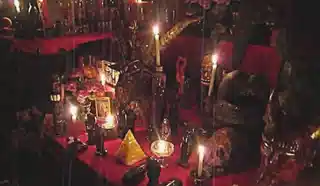
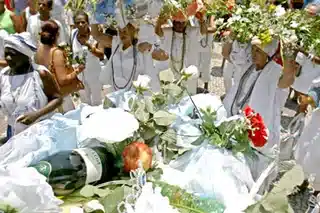
Imagine walking into a gentle dance of scent and sound: the crackling of candles, sharp notes of aromatic herbs burning, and soft melodies played on drums. Mediums enter trance states, their bodies vessels for the spirits who come to counsel, heal, and protect. The faithful seek guidance through prayer, song, dance, and offerings to the spirits, whether Indigenous, African, or Christian in origin. Each element draws on ancient wisdom, inviting harmony into daily life.
Spiritual Meaning and Connection
From a spiritual angle, Umbanda teaches profound lessons about unity through diversity. It reminds us that truth can wear many faces and that sacred wisdom often resides at the crossroads of cultures. By listening to the voices of the spirits—whether gentle elders, lively children, or noble warriors—practitioners open themselves to healing, understanding, and protection.
Questions readers often ask
Is Umbanda a form of witchcraft? While Umbanda involves magical and spiritual practices, it is a religion first and foremost, grounded in rituals that honor spirits and ancestors rather than solely occult workings.
Can anyone participate in Umbanda? In my experience, communities of Umbanda warmly welcome those who approach with respect and sincerity, though initiation and understanding are part of deepening involvement.
Are Catholic elements dominant in Umbanda? Yes and no. Catholic symbols are integrated and often used as openly recognizable representations, making the practice accessible - yet the core spirituality is richly Afro-Indigenous and Spiritist, transcending any single religious label.
Does Umbanda believe in protecting against negative energies? Absolutely. Protecting against harmful influences is one of the faith's key purposes, achieved through rituals, spirit guidance, and community support.
Final blessings
Umbanda stands as a powerful reminder that even in a world so often divided, spiritual paths can converge, creating something new and nourishing. If this world of spirits, healing, and vibrant ceremony calls to you, allow yourself to explore with an open heart and grounded steps. There is magic in connection—and Umbanda teaches us that in embracing all facets of our shared human heritage, we find both strength and grace.
Thank you for journeying with me through this rich tradition. I invite you to explore more about spiritual practices, magic, and the mysteries of the unseen here with me. Until next time, may your path be blessed and your spirit light.